
Reston deck care
Reston Deck Algae and Moss: Why Shade Makes It Worse
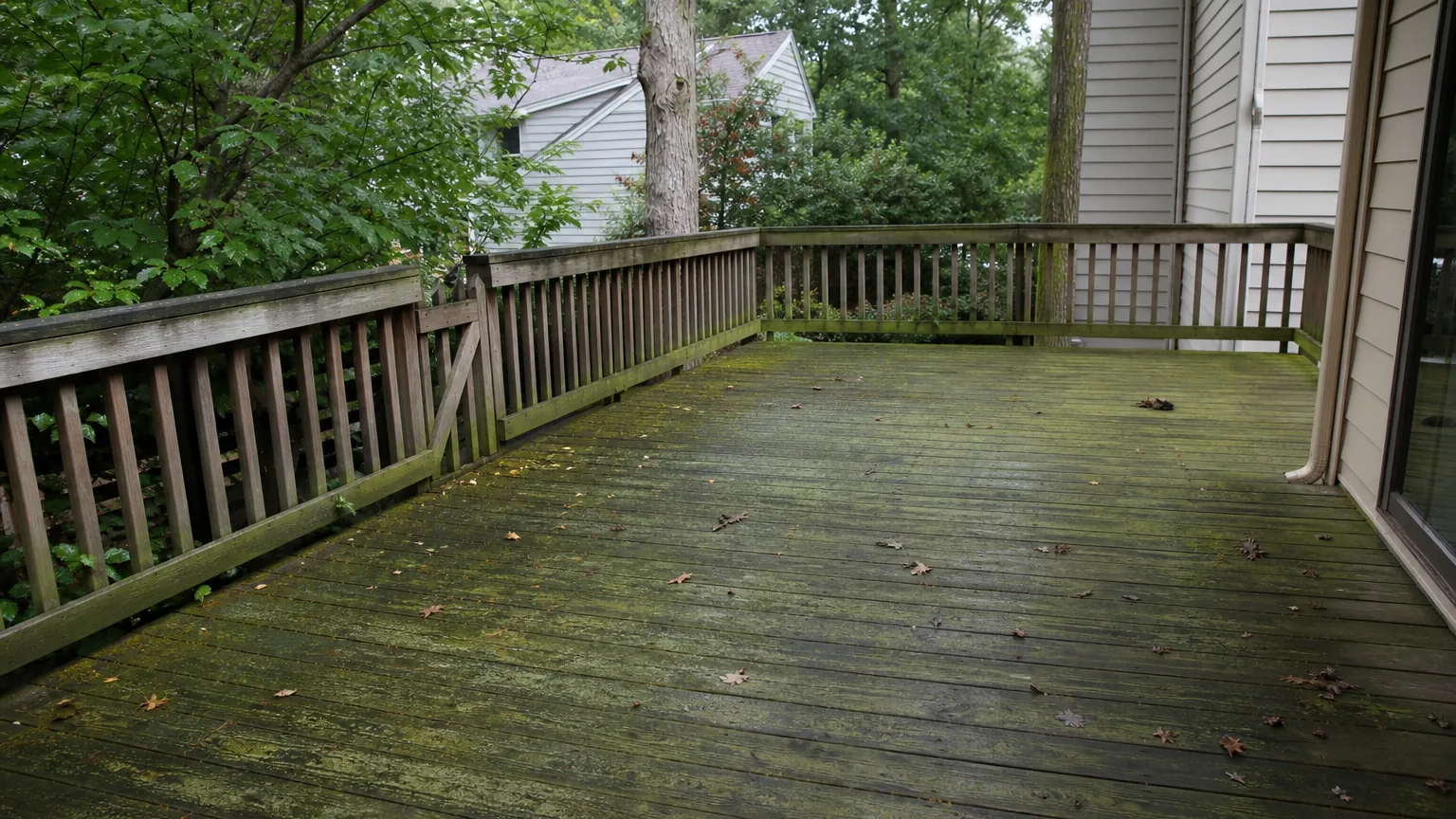
Reston deck algae and moss develop fastest where boards stay shaded, damp, and covered with pollen or leaf debris. Wood can hold moisture in its grain, while composite embossing traps organic material. The safest cleaning method depends on the deck material, age, finish, and manufacturer instructions.
Not sure whether your deck needs a gentle wash, controlled pressure, or repair before cleaning? Diamond Power Washers can assess the surface first.
TL;DR
Green film, black spotting, and small moss patches are biological growth, not ordinary dust. Clean wood and composite differently, follow the product maker’s care limits, and address slippery growth before it holds moisture against the surface for another season.
Key takeaways
- Shade and slow drying matter more than the deck’s age alone.
- Wood grain, finish condition, and soft spots should be checked before cleaning.
- Composite care limits vary by product generation; the manufacturer’s instructions win.
- A clean surface is not automatically ready for stain. Wood still needs adequate drying time.
- The existing deck cleaning service in Reston remains the booking page; this guide explains the condition.
Why does growth return so quickly on shaded decks?
Algae and moss return when a deck repeatedly stays wet long enough for airborne spores and organic debris to settle. Tree cover slows evaporation, board gaps collect leaves, and pollen supplies material that growth can feed on. Cleaning removes the buildup; better drainage and routine sweeping slow its return.
Reston’s wooded neighborhoods create plenty of shade without every deck behaving the same way. Exposure matters. A south-facing platform with open airflow may dry within hours, while a north-facing deck behind dense shrubs can remain damp into the next day.
Look first at board gaps, stair treads, planter edges, and the area below downspouts. Those are common moisture traps. A slippery green film usually indicates algae. Raised green patches are more consistent with moss. Dark spotting may be mildew, embedded dirt, tannin staining, or a combination, so a test area is useful before treating the whole deck.
Wood and composite do not get the same treatment
Wood decks require pressure low enough to avoid raising grain, cutting fibers, or stripping finish. Composite decks require the care instructions for the exact product line. Some current composite boards allow controlled pressure with a fan tip, while early-generation products may prohibit it because surface damage can affect warranty coverage.
| Surface condition | What to check first | Cleaning direction |
|---|---|---|
| Weathered wood | Soft spots, lifted fasteners, splinters, peeling stain | Cleaner-led process with a gentle rinse; repair weak boards first |
| Painted or stained wood | Adhesion and existing finish failure | Avoid pressure that strips sound coating unevenly |
| Current composite | Brand, product line, care guide | Use the approved cleaner, fan tip, distance, and pressure limit |
| Early composite | Product generation and warranty language | Often soap, water, soft brush, and hose rinse only |
For example, Trex publishes separate instructions for current and early-generation boards. Its current care guide permits controlled pressure on several product lines but warns against pressure washing early-generation products. That is why a blanket rule such as “all composite can take 1,500 PSI” is not reliable. The board maker’s written guidance is the safer decision point.
What should happen before any deck is washed?
A deck cleaning should begin with a dry visual inspection of boards, fasteners, railings, stairs, nearby outlets, plants, and drainage. Cleaning cannot repair rot, loose framing, failed coatings, or structural movement. Finding those issues first prevents a cosmetic service from hiding a problem that needs a carpenter.
Furniture and planters should be removed so the entire surface can be reached. Heavy leaf packs should be collected rather than blasted through the yard. Nearby plants need water before and after solution use, and runoff should be controlled instead of directed toward a storm drain, pond, or planting bed.
On wood, an inconspicuous test section reveals how the grain and finish respond. On composite, the test confirms that the chosen cleaner does not discolor the cap or leave a film. A professional composite deck cleaning process should still follow the specific manufacturer’s instructions.
When is cleaning enough, and when does the deck need more?
Cleaning is enough when the boards are sound and the problem is surface growth, pollen, or dirt. Cleaning is not a substitute for replacing soft wood, resetting loose fasteners, correcting drainage, or renewing a failed coating. Stain decisions should be made only after the clean wood is fully dry.
Gray wood is often UV weathering, not dirt. A wash can remove growth and reveal a more even surface, but it does not put pigment or water repellency back into the board. The separate guide to deck cleaning versus deck staining explains where one service ends and the other begins.
How often should a shaded Reston deck be cleaned?
A shaded Reston deck should be inspected each spring and cleaned when growth, slickness, or embedded debris appears. That may mean annual service on a heavily shaded wood deck, while an open composite deck may go longer. Condition-based timing is more reliable than promising one interval for every property.
Pollen season is a useful checkpoint because yellow residue collects in board texture and feeds later grime. Fall is the other: clearing leaves before winter reduces the wet material sitting against the surface. Neither inspection requires aggressive washing. Regular sweeping and prompt removal of plant debris can delay a full cleaning.
Frequently asked questions
Can moss damage a wood deck?
Moss holds moisture against wood and can make walking surfaces slippery. It does not prove that a board is rotten, but persistent moisture can accelerate coating failure and wood deterioration. Remove the growth, let the area dry, and inspect any soft or deeply cracked boards separately.
Can I pressure wash a composite deck?
It depends on the manufacturer and product generation. Some current composite lines permit controlled pressure with a fan attachment and minimum stand-off distance. Other products, especially early-generation boards, may prohibit pressure washing. Identify the product and follow its current written care guide before cleaning.
Will cleaning remove gray color from wood?
Cleaning removes surface contamination, but sun-weathered gray is a change in the wood itself. A cleaner may brighten the surface, yet restoring color and water repellency usually requires a separate finishing process after the wood dries. Test first so expectations match the board condition.
How long should a wood deck dry before staining?
Drying time depends on temperature, humidity, shade, wood species, and moisture content. A fixed 24-hour promise is unreliable on a shaded Reston property. The coating manufacturer may specify a maximum wood-moisture reading; use that requirement rather than the calendar alone.
Does routine deck cleaning require Reston Association approval?
Routine cleaning generally does not change the deck’s appearance or materials in the way replacement, expansion, or a new stain color can. Exterior alteration rules vary by cluster and property. Check current Reston Association and cluster guidance before changing visible color, material, or structure.
Get the deck assessed before the method is chosen
Diamond Power Washers provides surface-specific deck cleaning in Reston and explains the cleaning plan before work begins.