
Can You Pressure Wash a Chimney?
Quick answer: Yes — with the right approach. Brick chimneys can be cleaned safely using low-pressure soft-wash technique combined with a diluted cleaning solution. High-pressure direct washing is risky because it can force water into mortar joints, displace aging mortar, and drive moisture deep into the masonry where it causes freeze-thaw spalling. The key is low pressure and the right chemistry, not raw PSI.
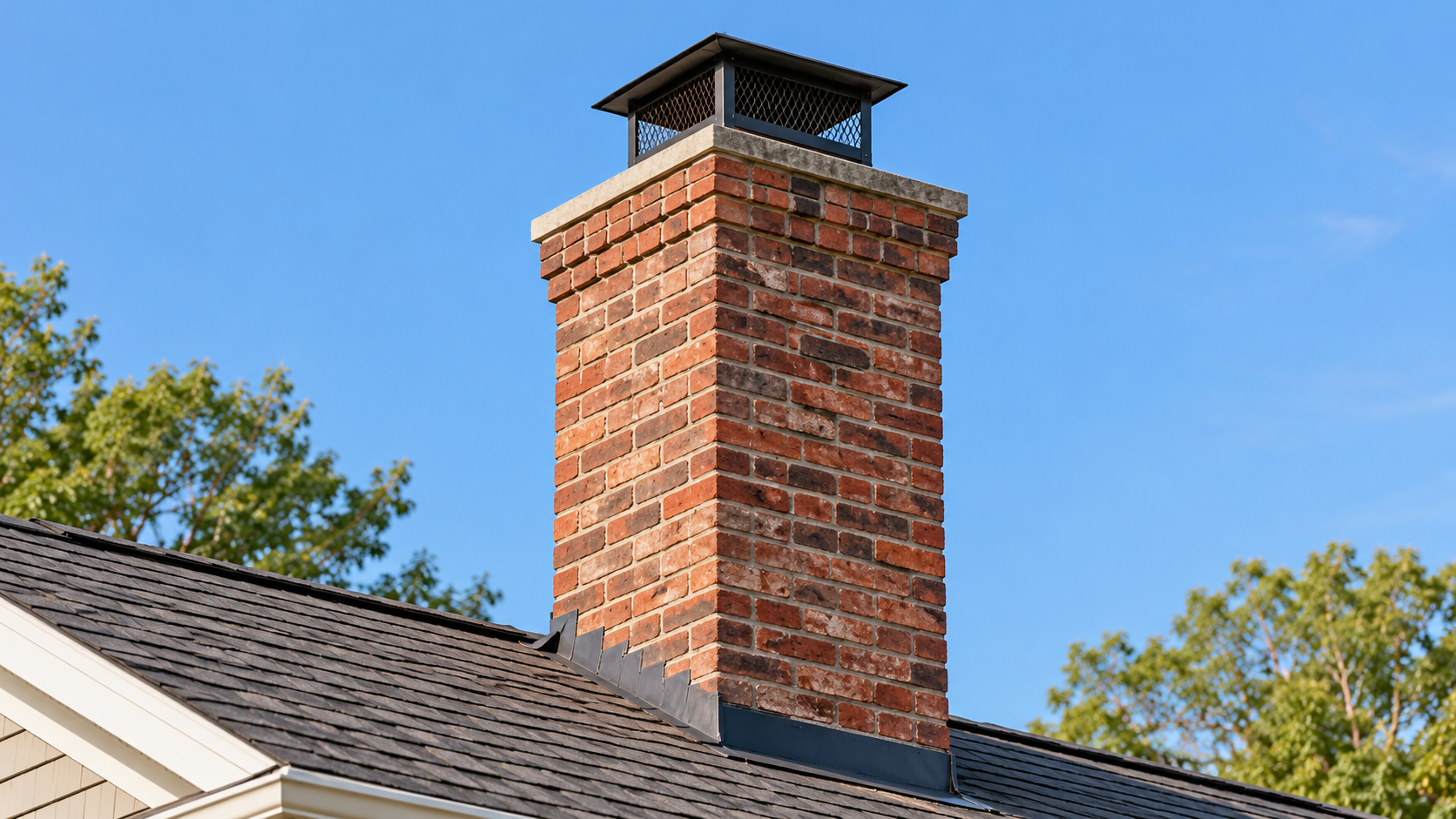
AI-generated illustrative image; does not depict a Diamond client project.
Why Chimneys Attract So Much Grime
A chimney sits at the highest point of the house, fully exposed to weather from every direction. It collects airborne pollution, diesel particulate, organic growth (algae, moss, lichen), and bird droppings. In Northern Virginia, the combination of humid summers and freeze-thaw winters accelerates biological staining and mortar deterioration — two problems that look similar from the ground but have different cleaning implications.
The black staining many homeowners notice near the top of a chimney is often a mix of creosote residue (from wood fires) and biological growth. The gray-green patches lower on the masonry are typically algae or lichen that have colonized porous brick and mortar. Both are washable, but they require different approaches, and cleaning is only one part of a proper chimney maintenance plan — structural inspection by a certified chimney sweep remains essential.
Important distinction: Exterior chimney cleaning (what this page covers) and interior chimney cleaning are entirely separate services. A chimney sweep cleans the flue interior — the firebox, damper, flue liner, and smoke chamber. Exterior pressure washing does not substitute for that service and cannot remove interior creosote buildup. If your chimney hasn’t been swept in more than a year of active fireplace use, schedule that separately.
The Primary Risk: Water Intrusion Through Mortar
Brick itself is reasonably tolerant of pressure washing — it is a hard, fired material. The vulnerabilities are the mortar joints, which are softer and more porous, and the flashing at the base of the chimney where it meets the roof. A high-pressure wand aimed at mortar joints can do real damage:
- Dislodge loose or aging mortar, leaving voids that allow water infiltration
- Force water past existing mortar into the chimney’s interior wythe
- Drive moisture into the space between the chimney and the flashing, wicking it under the roofing material
- Saturate firebrick near the top opening if the cap is absent or damaged
- Displace the crown (chimney cap mortar) if it is already cracked
None of these things happen instantly at moderate pressure, but they happen progressively — and the damage often doesn’t appear until the following winter when trapped moisture freezes and expands, causing spalling brick faces and crumbling mortar.
What Soft-Wash Technique Actually Means Here
Soft washing applies a diluted cleaning solution at low pressure (typically under 500 PSI at the surface) and lets the chemistry do the work rather than the force. For chimneys, the solution is usually a sodium hypochlorite mix — similar to what’s used on vinyl siding or roof washing — at a concentration appropriate for masonry. The solution is dwell-applied, left to kill and loosen biological growth, and then rinsed at low pressure.
On brick and mortar, this approach removes algae, moss, lichen, and most atmospheric staining without touching the structural integrity of the mortar joints. It also has a residual effect: treated masonry resists biological regrowth longer than surfaces that were simply power-blasted clean.
Soft-Wash at Height: The Safety Factor
Most residential chimneys extend 3 to 6 feet above the roofline, which means accessing them from below is not possible with a wand. Professional crews use extended wands, downstream injectors, or low-pressure pump sprayers to apply solution and rinse from a safe position on or near the roof. This is ladder work and roof work — it is not a DIY project for most homeowners. Falls from roof height account for a significant portion of serious contractor injuries, and working on a pitched roof while managing a sprayer and hose requires specific training.
Chimney Materials and What Each Tolerates
| Material | Pressure Tolerance | Preferred Method | Special Considerations |
|---|---|---|---|
| Standard clay brick (modern) | Up to 1,500 PSI, kept off mortar joints | Soft wash preferred; low-pressure rinse | Test first — some older clay brick is softer than it looks |
| Vintage / antique brick | Very low — under 500 PSI | Soft wash only | Pre-1950s brick is often soft and spalls easily |
| Mortar joints (all types) | Under 500 PSI — never direct high-pressure | Chemical dwell; low-pressure rinse | Any loose or cracked mortar should be repointed before washing |
| Stone (granite, bluestone) | Up to 2,000 PSI on hard stone | Low-pressure wash with soft-wash option | Mortar joints remain the vulnerability regardless of stone hardness |
| Stucco-faced chimney | Under 800 PSI | Soft wash strongly preferred | High pressure easily disbonds stucco from substrate |
| Pre-cast concrete cap (chimney crown) | Under 1,000 PSI | Low-pressure wash | Cracked crowns must be repaired before any cleaning — water will enter cracks |
Lichen vs. Algae vs. Moss: Why the Stain Type Matters
These three are often lumped together, but they behave differently and respond to cleaning differently. Getting this right affects how long the cleaning lasts.
Algae
Appears as greenish-black streaks, often more pronounced on the north or shaded faces of the chimney. Algae is the most surface-level growth and responds well to a standard soft-wash solution. It typically rinses away within a few minutes of chemical dwell time.
Moss
Visible as a fuzzy or matted green-to-brown layer, usually on horizontal ledges, the crown lip, or mortar joints. Moss holds water against the masonry, accelerating freeze-thaw deterioration. It requires slightly longer dwell time and may benefit from a second application. After treatment, dry moss can be brushed away — never pried, which removes mortar with it.
Lichen
The hardest of the three to remove. Lichen is a symbiotic organism that anchors itself into porous surfaces with tiny root-like structures called rhizines. A single application often turns lichen gray-white and loosens it, but a second treatment a few weeks later is usually needed for complete removal. Forcing lichen off with high pressure removes a layer of brick surface along with it — which is why chemical treatment is essential.
Timing note: Schedule chimney cleaning in late spring or early fall — not in winter, when water introduced into masonry freezes overnight, and not in midsummer heat, which dries the cleaning solution too quickly before it can dwell. Late September through early November is ideal for Fairfax-area chimneys.
Preparing the Chimney and Surrounding Area
Good prep prevents collateral damage and makes the job safer. Before any solution is applied, the crew should:
- Inspect the crown and cap — a damaged crown needs to be noted and flagged for repair; cleaning over a breached crown risks interior water damage
- Check mortar joint condition — areas with missing or crumbling mortar should be documented and may require repointing before washing
- Cover or wet down surrounding plants if sodium hypochlorite is used — diluted runoff is generally safe but extended dwell on plantings causes browning
- Close all windows and doors on that side of the house to prevent solution drift from entering
- Ensure the fireplace damper is fully closed so any water that runs down the exterior doesn’t wick into the firebox area
After Cleaning: What to Expect and What Comes Next
Clean brick takes on a consistent, saturated-looking color immediately after washing. As it dries over 24–48 hours, the color lightens back to its natural tone. If any areas remain darker than the surrounding brick after full drying, those spots likely had deeper biological staining that may need a second treatment.
Once the chimney is clean and fully dry, applying a penetrating masonry sealer is a logical next step. A quality silane/siloxane-based sealer reduces water absorption by 80–90%, which slows biological regrowth, protects mortar from freeze-thaw cycling, and makes future cleaning easier. Diamond Power Washers does not apply masonry sealers as part of our standard pressure washing service — that’s typically a separate mason or chimney contractor service — but we can note the recommendation in the job report.
Get a Clean, Professionally Assessed Chimney Exterior
Diamond Power Washers handles chimney exterior soft-washing in Fairfax and Northern Virginia. We’ll inspect the crown and mortar condition and use the approach that protects your masonry. Call or request a quote online.
Frequently Asked Questions
Yes, but the method matters. Brick chimneys clean best with a soft-wash approach — low pressure (under 500 PSI) combined with a diluted cleaning solution that kills biological growth chemically rather than blasting it off. High-pressure washing aimed at mortar joints risks forcing water into the masonry, dislodging aged mortar, and causing freeze-thaw damage the following winter.
For mortar joints, keep the surface PSI under 500. For the brick faces themselves, 1,000–1,500 PSI is generally safe on modern hard brick, but most professionals use soft-wash chemistry at much lower pressure so they don’t have to stay precise about nozzle distance and angle on an awkward vertical surface at height. Vintage or soft antique brick should never exceed 500 PSI at the surface.
It can, especially if the mortar is older, lime-based, or shows any existing deterioration. Direct high-pressure washing at mortar joints erodes the surface, opens voids, and in the worst cases dislodges large sections. A damaged crown or hairline cracks in mortar anywhere on the chimney become water channels if washed aggressively. Always inspect before washing and use low pressure with chemical dwell instead of force.
Apply a diluted sodium hypochlorite solution to the mossy areas and let it dwell for 10–20 minutes. The solution kills the moss at its root structure. After dwell time, rinse at low pressure. Dried, dead moss can be lightly brushed away. Never pry moss off mechanically — the rhizine anchors pull mortar fragments out along with the growth. A follow-up treatment may be needed for thick or long-established moss.
No. Chimney sweeping is an interior service that cleans the flue, firebox, smoke chamber, and damper — removing creosote and soot buildup that creates fire hazards. Exterior pressure washing cleans the outside brick and mortar surfaces. Both services are needed but entirely separate. If your fireplace has been used in the past year, schedule an annual sweep regardless of whether the exterior was cleaned.
Yes, it’s strongly advisable once the masonry is clean and fully dry. A penetrating silane/siloxane masonry sealer reduces water absorption by up to 90%, which limits biological regrowth, reduces freeze-thaw deterioration of mortar joints, and extends the time between cleanings. Allow at least 48–72 hours of drying time after washing before any sealer is applied. Sealing is typically done by a mason or chimney contractor as a separate service from pressure washing.
Late spring (May–June) or early fall (September–October) is ideal. Avoid washing in freezing temperatures — water introduced into masonry can freeze overnight and cause spalling. Avoid midsummer peak heat as well, which dries cleaning solutions too fast for proper dwell. For Northern Virginia homeowners, scheduling in late September or early October gives the masonry time to dry completely before the first hard freeze.