
Fence care & pest prevention
Can Fence Washing Help Prevent Pest Infestations Near Your Home?
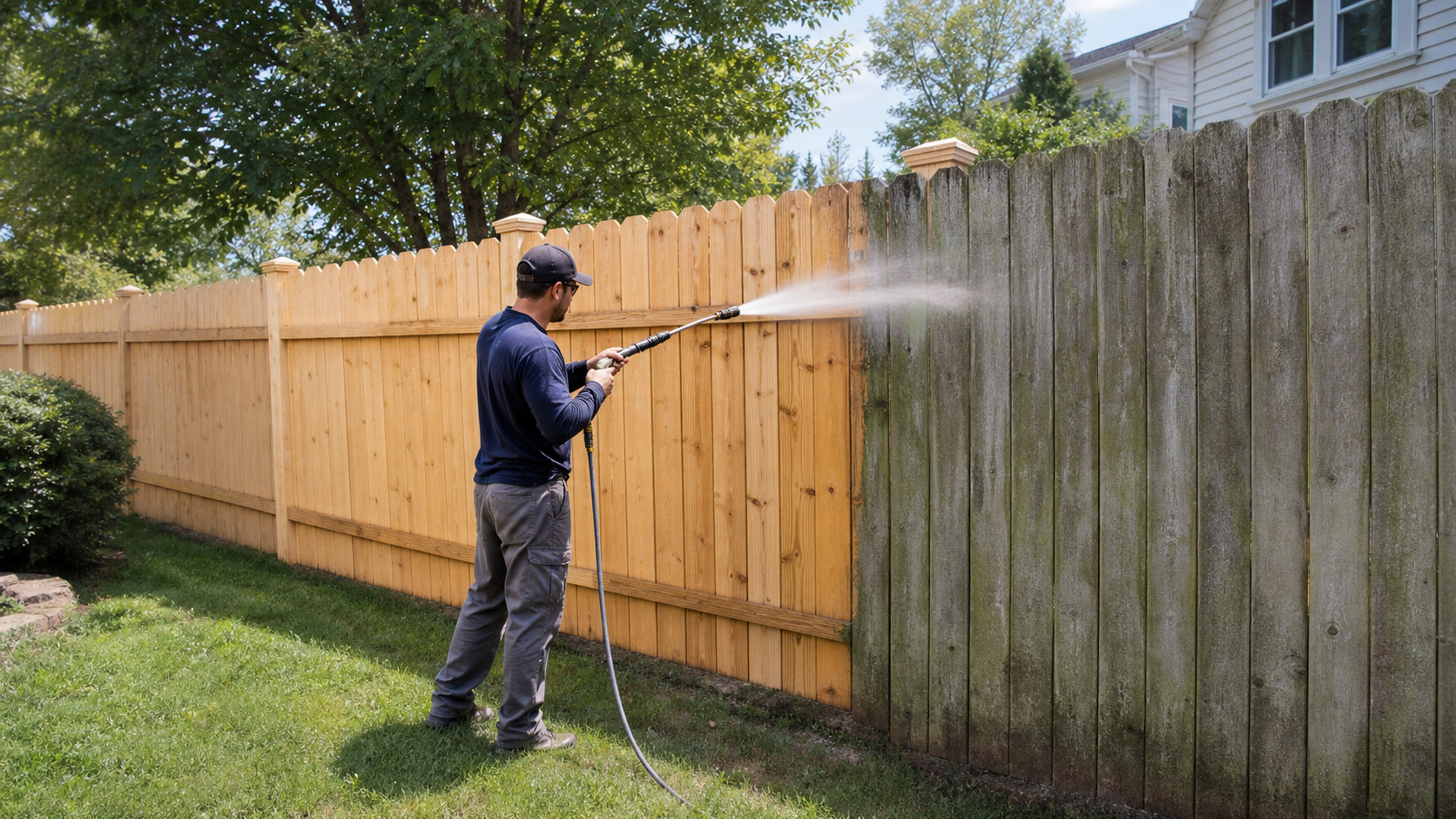
Yes. Pressure washing a fence removes the organic matter, fungal growth, algae, and web-building debris that attract spiders, wasps, carpenter bees, and wood-boring beetles. It won’t replace pest control treatment, but a clean fence eliminates the shelter and food sources that bring pests to the perimeter of your home in the first place. Most Northern Virginia homeowners benefit from one thorough wash per year, ideally in spring before peak nesting season.
Why Pests Love a Dirty Fence
A fence that hasn’t been washed in a season or two doesn’t just look rough. It becomes a micro-habitat. Algae, mold, and lichen hold moisture. Decaying wood fiber gives carpenter bees and wood beetles soft material to bore into. Cobwebs collect in corners and tight picket gaps. Mud-dauber wasps pack nests into crevices. The more organic buildup accumulates, the more hospitable the fence becomes to anything that bites, stings, or tunnels.
In Northern Virginia, the timing matters. Pests become active in March and April. By the time wasps are building nests in May, the ideal window for a preventive wash has passed. Spring pressure washing — before insects scout locations for the season — removes last year’s organic residue while the fence is still cold and quiet.
What Fence Washing Actually Removes
A professional fence wash strips algae, mildew, spider webs, wasp nest remnants, old mud-dauber tubes, loose bark, lichens, and any accumulated debris in seams and joints — all of it habitat for nuisance insects and arachnids.
Algae films are a food source for certain mite species and an anchor point for spiders looking for stable webbing locations. Lichen colonies trap moisture even in dry spells, keeping wood soft enough for carpenter bees to bore galleries. Mud-dauber nests from the prior season, if left in place, act as location markers — wasps often build near established nests because other wasps already vetted that spot.
Pressure washing at the right PSI blasts all of this off the fence surface, cracks, and gaps. A hot-water soft-wash rinse with an appropriate detergent can address mold and mildew at the biological level, not just at the surface.
| Pest | What attracts them to dirty fences | What fence washing removes |
|---|---|---|
| Spiders | Stable, undisturbed corners; existing webbing from prior year | Old webs, egg sacs, debris anchors |
| Mud-dauber wasps | Prior-year nest tubes in crevices and post caps | Nest remnants and mud tubes |
| Yellow jackets / paper wasps | Weathered wood fibers for pulp; sheltered rails and caps | Loose fiber, algae softening wood, prior nest traces |
| Carpenter bees | Soft, weathered, unpainted wood; existing bore holes | Surface fungal softening; loose grain |
| Wood-boring beetles | Decaying organic matter, bark, lichen colonies | Lichen, loose bark remnants, organic buildup |
| Millipedes / pill bugs | Moist soil contact at fence base; decaying plant debris | Debris packed at soil contact points |
PSI by Fence Material: Getting the Balance Right
The goal is to clean aggressively enough to clear all organic buildup without damaging the fence material. Too much pressure on wood raises the grain permanently and creates more surface area for future moisture retention. Vinyl and composite can crack if you use a zero-degree nozzle at close range.
| Fence material | Recommended PSI | Nozzle / technique |
|---|---|---|
| Pressure-treated wood | 1,200 – 1,500 | 25-degree fan, work with the grain |
| Cedar / pine (natural) | 1,000 – 1,200 | Wide fan, keep wand moving; check for gray weathered sections |
| Vinyl / PVC | 1,200 – 1,800 | Soft-wash detergent for algae; rinse from above |
| Aluminum / metal | 1,500 – 2,000 | Standard fan; inspect welds and rails after |
| Composite wood | 1,000 – 1,500 | Check manufacturer spec; most void warranty above 1,500 |
| Wrought iron / steel | 1,800 – 2,500 | Pay attention to rust pitting; treat rust spots after wash |
Hot water matters for organic pest-related buildup. Algae, mold, and wasp nest cement respond better to hot water at moderate pressure than to cold water at high pressure. A surface cleaner attachment helps cover large fence runs evenly without striping.
What Fence Washing Can’t Do
It’s worth being clear here. Pressure washing removes habitat and food sources. It is not a pesticide treatment. If carpenter bees have already bored galleries deep into fence rails, washing removes the organic buildup around the holes but doesn’t treat the galleries themselves. The same is true for termites: if termites are already present in the wood, pressure washing doesn’t touch them.
- Kill active infestations inside wood (termites, carpenter bee galleries)
- Replace chemical pest control treatments at the soil line
- Prevent ground-dwelling insects from traveling under or around the fence
- Fix existing structural damage to posts or rails from wood rot or boring
- Keep pests away permanently without follow-up maintenance
Think of fence washing as habitat reduction, not extermination. It’s most effective as part of a spring maintenance routine that also includes trimming back vegetation from the fence line and inspecting rails and post caps for nesting activity.
Timing a Wash for Maximum Pest Prevention
March or early April is the ideal window for Northern Virginia. Insect scouts emerge in the 50s and 60s (Fahrenheit) and start locating nesting sites. A wash before that activity removes last year’s attractants before any scouting happens.
Washing in late summer or fall is still useful for appearance and for slowing winter moisture damage, but it has less impact on next year’s nesting. Insects have already established by then. The preventive value is highest in early spring.
If your fence is wood, a spring wash followed by a sealant or stain application within two to four weeks of drying closes the surface grain. Sealed wood is much harder for carpenter bees to bore into than open, weathered grain. The wash sets up the sealing; the sealing does the long-term work.
Related: Can you pressure wash a wood fence? covers how Diamond handles different wood types, including the grain-raising concern with cedar and pine.
Artillery Fungus and Fence Lines
Northern Virginia homeowners with wood chip or bark mulch along fence lines deal with a specific problem: artillery fungus. This micro-fungus ejects tar-like spores that stick to fence surfaces and are extremely difficult to remove once dried. While artillery fungus is not a pest in the conventional sense, it creates a textured, porous surface that spiders and other insects find easy to anchor webs to.
Pressure washing removes fresh artillery fungus deposits effectively, but dried spots may need a specialized detergent and longer dwell time. If you have a mulched bed running the length of your fence, this is worth mentioning when you schedule a service call. Diamond’s technicians adjust dwell time and detergent mix for fungal deposits. See also: artillery fungus and pressure washing for the full breakdown.
Licensed & insured. Veteran-owned. Serving Fairfax, Manassas, Woodbridge, and 15+ cities across Northern Virginia.
What to Check After a Fence Washing Service
Once the fence is dry — typically two to four hours on a warm day — do a quick walkthrough along the full fence line:
- Post caps: inspect for any remaining mud-dauber tubes or wasp casing fragments in cap undersides
- Rail joints: check where rails meet posts for moisture pockets or soft spots that could attract boring insects
- Gate hardware: hinges and latches are rust-prone; treat any bare metal spots promptly
- Base of posts: soil contact at ground level is the highest-risk zone for wood rot and carpenter ant activity; keep the soil line clear
- Gaps between pickets: look for any remaining debris packed into narrow gaps, especially near existing wasp activity
If you notice any soft spots or discoloration after the wash, those are worth flagging to a contractor before sealing. A sealant over compromised wood traps moisture rather than preventing it.
Ready to Clear the Perimeter?
Diamond Power Washers handles wood, vinyl, aluminum, and composite fences across Northern Virginia. One spring wash sets your fence line up for a cleaner, lower-pest season.
Frequently Asked Questions
Does pressure washing a fence actually reduce spiders?
Yes, noticeably. Pressure washing removes webs, egg sacs, and the corner debris spiders anchor to. It won’t eliminate all spiders, since they’ll recolonize over the season, but a thorough spring wash significantly reduces the population that establishes itself along the fence in early summer.
Can fence washing help with wasps and hornets?
It helps with prevention, not active nests. Washing in early spring removes prior-year nest remnants before new queens scout locations. If wasps are actively building when you call, the technician will note the active nests and avoid disturbing them during the wash. Active wasp nests require a pest control professional, not a pressure washer.
Will pressure washing stop carpenter bees from boring into my fence?
Washing removes the soft, weathered surface grain that makes boring easier, and following up with a penetrating sealant closes the wood surface further. That combination makes the wood less attractive to carpenter bees. Existing bore holes need to be plugged separately — pressure washing doesn’t fill them — but a sealed fence is much less likely to attract new activity than an open, weathered one.
How often should I have my fence washed for pest prevention?
Once a year, in early spring, is the most effective cadence for pest prevention in Northern Virginia. That timing clears winter organic accumulation before insects become active in March and April. If you’re also sealing or staining the fence, wash first and seal two to four weeks later once the wood has dried fully.
Does the type of fence material affect pest attraction?
Yes. Wood fences, particularly weathered or untreated wood, are the most pest-attractive because they offer boring sites for carpenter bees and wood beetles. Vinyl fences don’t provide boring habitat, but algae and mold still attract spiders and harbor mud-dauber nests. Aluminum and steel fences are the least attractive to wood-boring pests but can still accumulate web-building debris in joints.
What about termites — can fence washing prevent them?
Fence washing doesn’t prevent or treat termites. Termites live in soil and travel underground. If termites are present in fence posts, pressure washing won’t reach them. Ground contact is the risk factor for termite activity, and the best mitigation is reducing soil-to-wood contact and keeping the base of posts dry. If you suspect termite activity, contact a licensed pest control company in Virginia.
Is hot water better than cold water for pest-related buildup?
For organic buildup specifically, yes. Hot water breaks down algae, mold, and wasp nest cement more effectively than cold water at the same pressure. Diamond’s equipment includes hot-water capability, which makes a meaningful difference on fence runs with heavy green or black organic staining.
Can I pressure wash near a vegetable garden or flower beds along the fence?
Yes, with care. Diamond technicians rinse nearby plants with fresh water before and after washing to dilute any detergent runoff. We use biodegradable cleaning solutions. For very sensitive plantings, covering them with a tarp during the wash is an option — let the technician know during the walkthrough so they can plan accordingly.
About this page: Diamond Power Washers is a veteran-owned, family-operated pressure washing company serving Northern Virginia since 2017. Our technicians wash wood, vinyl, composite, and metal fences throughout Fairfax, Manassas, Woodbridge, and surrounding communities. This page covers pest prevention through professional fence washing and does not constitute pest control advice. Licensed & fully insured in Virginia.