
Centreville roof care
Centreville Roof Black Streaks: Algae, Moss, and Safe Cleaning
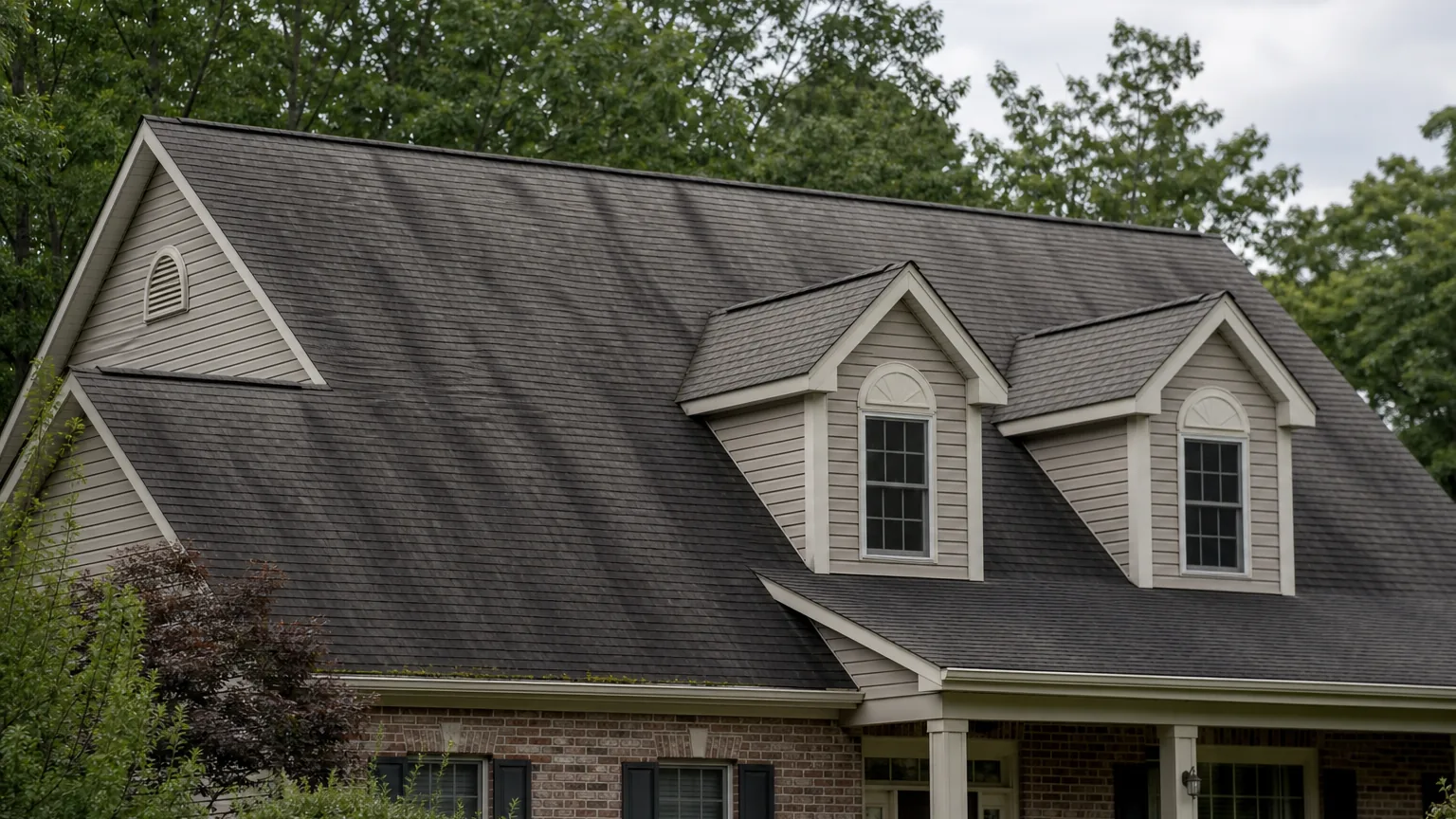
Centreville roof black streaks on asphalt shingles are commonly algae discoloration, while raised green growth is more consistent with moss. They are different conditions, but neither should be blasted with high pressure. Safe treatment follows asphalt-roofing guidance, protects the shingles, and keeps people off a wet, slippery roof.
Black streaks, moss, lichen, and ordinary debris do not all receive the same treatment. Diamond Power Washers can identify the roof condition from the property before recommending a scope.
TL;DR
Black streaks are usually algae discoloration, not soot. Moss is raised and can hold moisture around shingle edges. The Asphalt Roofing Manufacturers Association warns against power washers, brushes, and brooms on asphalt roofing. Roof treatment should be low pressure, manufacturer-aware, and performed with strict fall and landscape protection.
Key takeaways
- Algae looks like dark streaking; moss has visible thickness and texture.
- High-pressure washing can damage asphalt roofing and should not be used to remove algae.
- A clean-looking roof is not proof that leaks, flashing issues, or aging shingles were repaired.
- Shade and slow drying explain why one roof slope may stain before the others.
- The existing Centreville roof cleaning page remains the service destination.
What causes black streaks on asphalt shingles?
Black roof streaks are commonly caused by colonies of blue-green algae that spread across asphalt shingles and create dark discoloration. The streaked pattern becomes visible as water moves down the roof. Shade, moisture, and nearby vegetation can make one slope show growth earlier than a sunnier slope.
The streaks often begin as scattered darker areas and become more continuous over time. They are easiest to see on lighter shingles, but the organism can be present on darker colors too. Road dirt and soot can discolor roofing, yet the familiar downward black pattern is strongly associated with algae.
Centreville homes frequently combine mature trees with complex roof shapes, dormers, valleys, and north-facing slopes. Those features create uneven drying. A roof may look clean from the street while the rear valley or lower shaded slope holds growth.
How is moss different from algae?
Moss is a raised plant with visible green texture, while roof algae usually appears as flat discoloration. Moss can hold moisture at the shingle surface and grow around edges. Pulling, scraping, or brushing it off can disturb granules and tabs, so removal should be gradual and roof-safe.
| Condition | Typical appearance | What not to do |
|---|---|---|
| Algae | Flat black or dark streaks following the slope | Do not blast with a pressure washer |
| Moss | Raised green patches, often at shaded edges or valleys | Do not scrape or pull aggressively |
| Lichen | Crusted, attached patches in gray, green, or pale tones | Do not assume one treatment will release it immediately |
| Leaf debris | Loose material collected behind chimneys or in valleys | Do not walk a wet roof without proper controls |
More than one condition can be present. That is why a ground-level visual assessment and clear photos are useful before work. If shingles are curled, missing, brittle, or leaking, a qualified roofing contractor should evaluate the roof before cosmetic cleaning.
Why should an asphalt roof never be pressure washed?
High-pressure washing can remove protective granules, disturb shingles, drive water into roof details, and leave visible wand marks. The Asphalt Roofing Manufacturers Association states that power washers and brushes or brooms should not be used to clean algae from asphalt roofing. Cleaning chemistry and gentle application do the work.
A roof is not a driveway tilted at an angle. Asphalt shingles are layered to shed water downward. Spraying upward or forcing water into laps, flashing, ridge vents, and penetrations works against the roof’s design.
There is also a serious fall hazard. Treatment makes the roof wet and slippery, and algae or moss is already slick. A homeowner should not climb onto the roof to test a cleaner. Professionals need the right access plan, fall protection, controlled application, and a process that protects people below.
What should roof treatment protect around the home?
A roof-treatment plan should account for gutters, downspouts, siding, painted surfaces, metal fixtures, rain collection, pets, people, and every plant below the runoff path. Landscaping is normally watered before, monitored during, and rinsed after treatment. The exact controls depend on the roof and site drainage.
Downspouts can concentrate runoff into one planting bed. Copper, unfinished metal, decorative stone, and sensitive vegetation deserve specific attention. The crew should explain where the solution will travel and who is monitoring the ground while application occurs.
Ask what happens if wind changes, a downspout is disconnected, or a gutter overflows. Those are practical jobsite questions. A process that only discusses the roof and ignores everything below it is incomplete.
How often should a Centreville roof be treated?
A Centreville roof should be inspected when streaks or raised growth first appear rather than treated on an automatic annual schedule. Shaded slopes may show algae sooner than sunny ones. Treatment timing depends on roof age, material condition, tree cover, drainage, and the type of growth present.
Tree trimming may improve airflow when branches are crowded against the roof, but arborist advice is appropriate for large limbs. Keeping gutters flowing and removing heavy debris from roof valleys also reduces moisture traps. None of these steps guarantees an algae-free roof; they address conditions that help growth persist.
For the service process and local booking details, see roof cleaning in Centreville. The broader guide to why roofs should not be pressure washed covers the material-safety question in more detail.
Frequently asked questions
Are black roof streaks mold?
Black streaks on asphalt shingles are commonly algae discoloration rather than household mold. A visual pattern can suggest the cause, but photos and surface condition still matter. Flat streaks, raised moss, crusted lichen, soot, and shingle wear should not be treated as one problem.
Can black algae cause a roof leak?
Black streaks do not by themselves prove that a roof is leaking. Leaks are more directly associated with failed flashing, damaged shingles, penetrations, underlayment, or drainage problems. Cleaning improves biological discoloration; it does not replace a roof inspection or repair hidden water entry.
Will moss disappear immediately after treatment?
Not always. Roof-safe treatment can kill moss, but attached material may release gradually through weathering rather than being scraped from the shingles. The expected timeline depends on the amount of growth and roof condition. Aggressive removal can cause more damage than waiting for natural release.
Is roof soft washing the same as house soft washing?
Both use low-pressure application, but the surface, chemistry, runoff controls, access, and safety plan differ. Asphalt roofing follows roof-specific manufacturer and industry guidance. A company that soft-washes siding should still have a separate procedure for shingles, plants, gutters, and fall protection.
Should I replace an algae-streaked roof?
Algae staining alone does not automatically require roof replacement. Age, granule loss, curling, cracking, leaks, flashing, and deck condition are separate factors. If the roof shows physical failure, ask a qualified roofer to evaluate it before cleaning or making a replacement decision.
Identify the roof condition before treating it
Diamond Power Washers provides low-pressure roof cleaning in Centreville with roof and landscape protection built into the scope.