
Surfaces & materials
Can Pressure Washing Remove Oil Stains from a Driveway or Concrete?
Pressure washing alone rarely removes a set oil stain from concrete. Fresh spills come up well, but older penetrated stains need a degreaser applied and allowed to dwell before rinsing under pressure. With the right treatment, most residential oil stains on a concrete driveway can be dramatically reduced, and many can be fully removed.
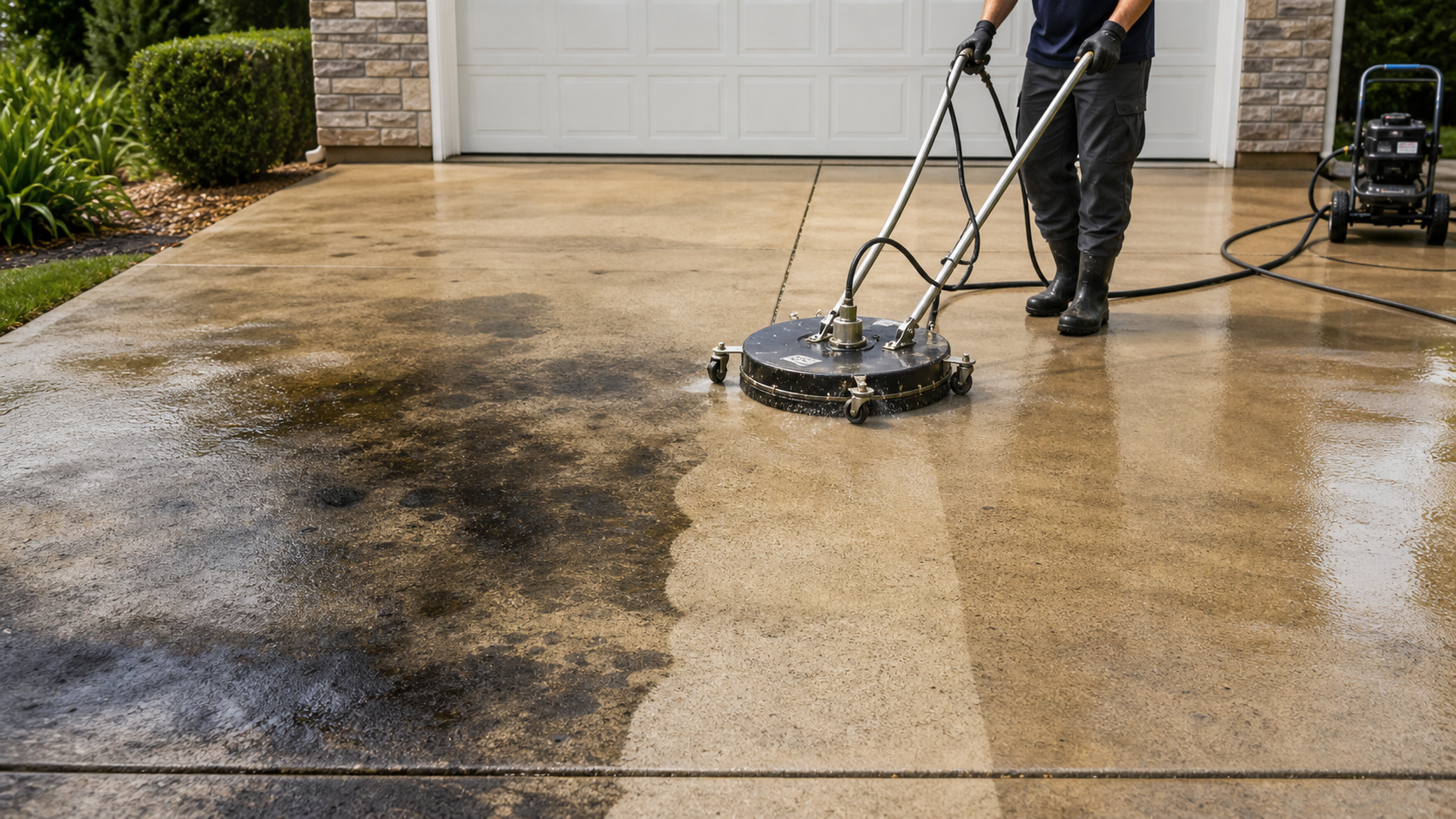
Why oil stains on concrete are different
Concrete is porous, which is part of what makes it durable, but that porosity also means oil soaks in rather than sitting on the surface. Motor oil, transmission fluid, and similar petroleum products penetrate the concrete’s capillaries quickly, especially in older, more porous driveways. Once they’re in, water alone, at any pressure, can’t pull them back out. You need a chemical that breaks the oil down before rinsing even becomes useful.
This is different from dirt, algae, or rust, which all respond well to pressure washing with or without a chemical pre-treatment. Rust in particular takes a different chemistry again, as our guide to removing rust stains from concrete explains. Oil requires an alkaline degreaser specifically designed to saponify or emulsify the petroleum so it can be rinsed away. The order matters: apply the degreaser, let it dwell, then apply pressure and hot water.
Northern Virginia driveways compound this challenge because so many of them are older poured concrete, sometimes with surface sealer worn away over the years. The more open and porous the surface, the deeper the oil penetrates and the harder the stain is to fully lift. The same is true of pavers, where oil can seep into the joints as well as the stone. Understanding how each of these surfaces and materials reacts is what lets a crew pick the right treatment.
Fresh spills vs. set stains: what you can realistically expect
A spill under 24 to 48 hours old has the best chance of full removal. Blotting with cat litter or an absorbent material immediately after the spill pulls oil back out before it penetrates deeply. Then a degreaser and pressure wash clears the rest. Stains that are weeks, months, or years old have penetrated further and may require multiple treatment cycles. Full removal isn’t always possible, but significant improvement almost always is.
For very old or large stains, setting realistic expectations before starting is important. A stain that’s been sitting through multiple Northern Virginia summers and freeze-thaw cycles has likely bonded with the concrete at a deep level. A professional cleaning will make a noticeable improvement, but the surface may retain a ghost mark or slightly discolored area even after full treatment. This is not a failure of the process; it’s a physical limit of how deep the stain has penetrated the substrate.
| Stain type | Likely outcome with treatment | Key factor |
|---|---|---|
| Fresh motor oil (under 48 hours) | Full or near-full removal | Act quickly; absorb first |
| Motor oil, weeks old | Significant reduction; faint shadow may remain | Multiple treatment passes help |
| Motor oil, years old | Noticeable improvement; ghost mark common | Deep penetration limits full removal |
| Transmission fluid | Similar to motor oil; red dye may leave tint | Color from dye can persist longer |
| Cooking oil / grease | Usually easier to remove than motor oil | Responds well to alkaline degreasers |
| Hydraulic fluid | Moderate; may need repeat treatment | Petroleum-based, penetrates quickly |
The right process for oil stain removal
The process that gets the best result: first, if the stain is relatively recent, blot and absorb as much surface oil as possible. Then apply an alkaline degreaser to the stain and let it dwell for at least 15 to 30 minutes. Work the degreaser in with a stiff brush if the stain is significant. Then rinse under hot water pressure. For older stains, repeat the application before rinsing. Sealing the concrete afterward prevents future stains from penetrating as deeply.
Hot water makes a meaningful difference on oil stains. A hot-water pressure washer (sometimes called a power washer, where the machine heats the water) breaks down petroleum compounds more effectively than cold water at the same pressure. For stubborn stains, this is often the deciding factor between a 70% reduction and a 95% reduction.
The degreaser type matters too. Alkaline cleaners (high pH, like commercial degreasers used in professional cleaning) break down oil-based stains most effectively. Solvent-based approaches can also work but carry more risk on sealed concrete surfaces and require careful rinse protocols. A professional residential power washing crew brings the right product for the substrate and the stain.
What to do right after an oil spill on your driveway
- Absorb first. Pour cat litter, baking soda, or an absorbent floor sweep onto the spill immediately and leave it for 30 minutes to an hour before sweeping up. This pulls surface oil back out before it penetrates.
- Apply a degreaser. A commercial concrete degreaser or a strong dish soap applied to the stain and scrubbed in will break down what’s left on the surface.
- Rinse under pressure. A garden hose doesn’t have enough force to flush the emulsified oil out of the pores. A pressure washer or hot-water machine is needed at this stage.
- Repeat if needed. One pass rarely gets everything on any but the freshest stains. Two to three rounds of treatment and rinsing is normal.
- Seal the concrete. Once clean, a penetrating concrete sealer fills the pores and makes future spills much easier to clean before they set.
Oil stain on your driveway?
We bring the right degreaser and equipment for the job. Serving Fairfax, Manassas, Woodbridge, and all of Northern Virginia. Veteran-owned, fully insured, 100% satisfaction guaranteed.
Frequently asked questions
Can pressure washing remove oil stains from concrete?
Pressure washing alone won’t lift a set oil stain. Oil penetrates concrete’s pores and requires a degreaser to break it down before pressure rinsing can remove it. Fresh spills respond much better than old ones. With the right process, degreaser application plus hot-water pressure washing, most residential oil stains improve significantly, and many fresh stains can be fully removed.
What’s the best way to remove an oil stain from a concrete driveway?
For fresh spills: absorb as much oil as possible first (cat litter works well), then apply an alkaline degreaser, let it dwell for 20 to 30 minutes, scrub it in, and rinse under hot water pressure. For older stains, repeat the degreaser application before rinsing. Multiple passes almost always produce a better result than one heavy application.
How old can an oil stain be and still be removed?
There’s no hard cutoff, but stains older than several months in porous concrete are unlikely to be fully removed. They can still be significantly lightened. Stains that are years old often leave a ghost mark or slightly darkened area even after thorough treatment. The earlier you treat an oil stain, the better the result, so acting within 24 to 48 hours gives you the best chance.
Does hot water help remove oil stains from concrete?
Yes, significantly. Hot water breaks down petroleum compounds more effectively than cold water at the same pressure. A hot-water pressure washer, which heats the water internally, makes a noticeable difference on oil stains compared to a standard cold-water machine. For stubborn or older stains, the combination of a good degreaser and hot water rinsing produces the best results.
Can I use dish soap to remove oil from concrete?
For very small or fresh spills, concentrated dish soap applied and scrubbed in works as a first step. It’s an alkaline surfactant that helps emulsify oil. For larger or older stains, a commercial alkaline degreaser formulated for concrete is more effective. Dish soap alone followed by a garden hose usually isn’t enough force or concentration to fully clean a set stain.
Should I seal my concrete after removing an oil stain?
Yes. A penetrating concrete sealer fills the open pores that allowed the oil to soak in and makes the surface much more resistant to future staining. Apply it after the concrete is fully clean and dry. A sealed driveway is easier to clean generally, and if another spill happens, it’s far less likely to penetrate before you can absorb it.
Is motor oil harder to remove than other oils?
Motor oil and other petroleum-based fluids like transmission fluid and hydraulic fluid penetrate concrete quickly and bond with it over time, making them among the harder stains to remove. Cooking oil and grease are also oily but tend to respond better to alkaline degreasers. Any oil-based stain benefits from the same process: absorb, degrease, dwell, rinse under heat and pressure.
or call 703-853-4738