
Surface-safe cleaning
Can You Pressure Wash Pavers?
Pressure washing pavers works well, but it blasts the sand out of the joints. Use a fan tip, moderate pressure, and keep your distance, then re-sand the joints and reseal afterward. Skip that step and the pavers shift, weeds return, and the surface wears faster. The cleaning is only half the job.
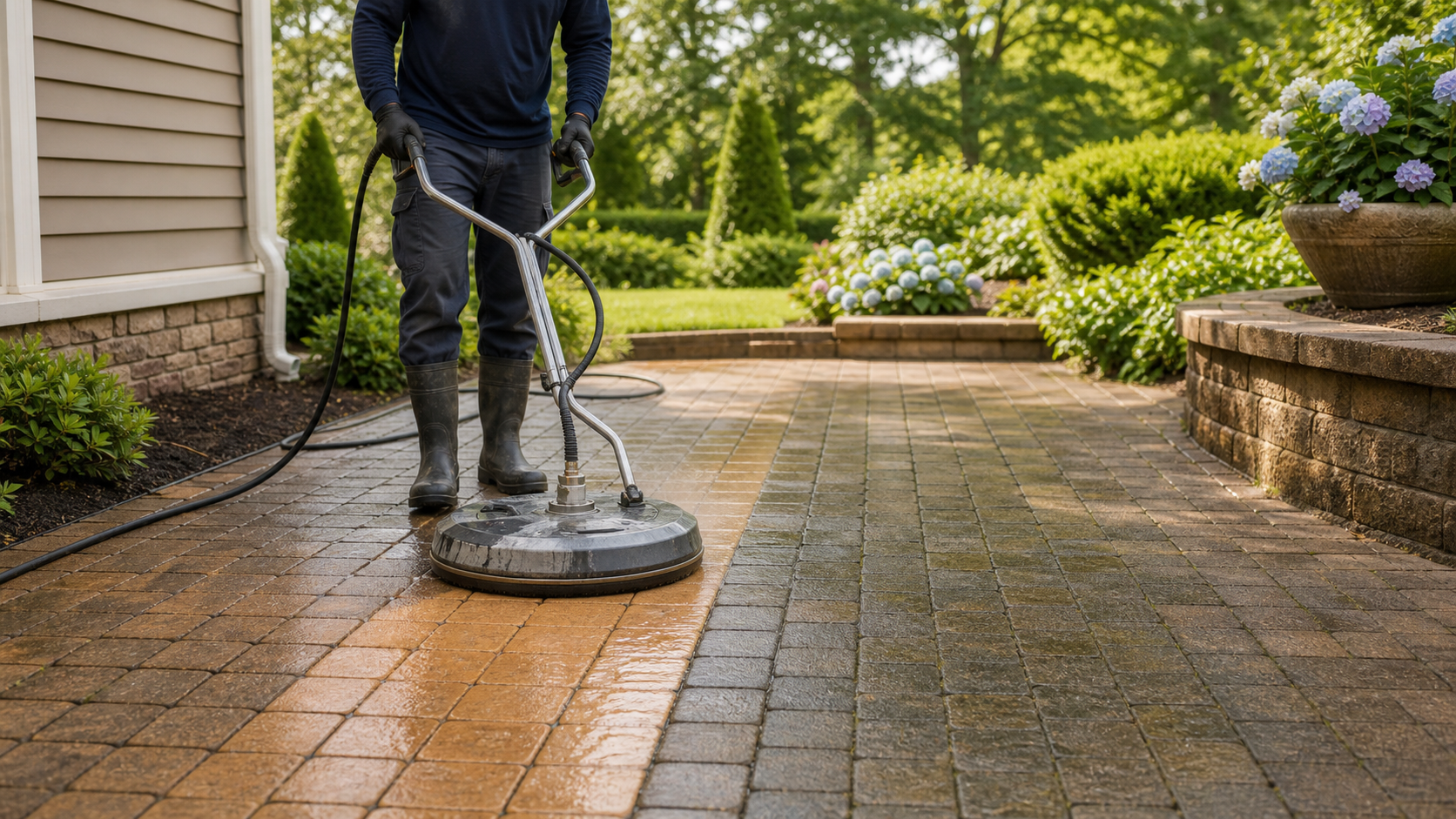
Can you pressure wash pavers yourself?
You can, and pavers handle more pressure than siding or stucco. The catch is the joints. A strong, close jet strips the sand from between the pavers in seconds, and once that sand is gone the pavers can shift, settle unevenly, and let weeds and ants move in. Cleaning is easy; the aftermath is where people get caught.
Hold the tip too close and you also etch the face of the paver, especially on concrete pavers, which leaves a rougher, lighter patch that traps dirt faster afterward. Work at an angle, keep the tip moving, and stay back. The goal is to lift the grime, not to carve the surface.
The part most people skip: re-sand and reseal
After washing, the joints need fresh polymeric sand swept in and set, and the pavers should be resealed. The sand locks the pavers together and blocks weeds. The sealer protects the color and makes the next cleaning easier. Washing without redoing these two steps leaves the patio weaker than before.
This is the difference between a quick rinse and a job that lasts. We clean, let everything dry, sweep in new polymeric sand, and apply sealer so the patio holds up through Northern Virginia’s freeze-and-thaw winters. Done right, a sealed paver surface stays cleaner and sheds stains for years.
The right order of operations
- Clear and pre-treat weeds, moss, and stains before washing.
- Wash at an angle with a fan tip, moderate pressure, tip kept moving.
- Let it dry fully so new sand can set properly.
- Sweep in polymeric sand to refill and lock the joints.
- Seal the surface to protect color and slow the next round of growth.
| Done right | Common mistake | |
|---|---|---|
| Pressure | Moderate, fan tip, at an angle | High, narrow tip, up close |
| Joints | Re-sanded after washing | Left empty, sand blasted out |
| Surface | Sealed afterward | Left bare and porous |
| Weeds and ants | Blocked by fresh sand | Move back into open joints |
| Longevity | Stable for years | Pavers shift and settle |
Want pavers cleaned and sealed the right way?
We clean, re-sand, and seal paver patios and walkways across Fairfax, Manassas, and Woodbridge. Licensed, insured, and backed by a 100% satisfaction guarantee.
Sealed pavers and pavers around a pool
Sealed pavers need a gentler touch so the pressure does not strip the sealer, and they usually need resealing after a deep clean. Around a pool, the same rules apply, plus a thorough rinse so no cleaning solution reaches the water. Salt and pool chemicals also wear sealer faster, so poolside pavers get checked more often.
If your pavers were sealed in the last year or two, tell whoever cleans them. A wash meant for bare pavers can dull or cloud a fresh sealer. We adjust the approach based on whether the surface is sealed and how recently.
Frequently asked questions
What PSI is safe for pressure washing pavers?
A moderate setting with a fan tip, held at an angle and kept moving, cleans pavers without carving them. Concrete pavers etch under a close, narrow jet, so distance matters more than raw power. The bigger issue is the joint sand, which blasts out easily, so plan to re-sand no matter the pressure you use.
Do you need to re-sand pavers after pressure washing?
Yes. Pressure washing strips sand from the joints, and empty joints let pavers shift and weeds return. After the surface dries, sweep in fresh polymeric sand to refill and lock the joints, then seal. Re-sanding and sealing are what make the cleaning last instead of leaving the patio weaker.
Can you pressure wash sealed pavers?
Yes, but gently, so the pressure does not strip the sealer. Sealed pavers usually need resealing after a deep clean anyway. Tell your cleaner if the pavers were sealed recently, since a wash meant for bare pavers can dull or cloud a fresh sealer. The method changes based on the surface.
How do you keep weeds out of paver joints?
Fresh polymeric sand is the answer. After washing, sweeping new polymeric sand into the joints and setting it blocks the gaps where weeds and ants take hold. Sealing on top adds another layer of protection. Open, sand-starved joints are the reason weeds keep coming back between pavers.
Can you pressure wash pavers around a pool?
Yes, with the same care plus a thorough rinse so no cleaning solution reaches the pool. Poolside pavers see salt and chemicals that wear sealer faster, so they need checking more often. Keep the pressure moderate to protect the joints and the sealer, then re-sand and reseal as needed.
How often should paver patios be cleaned?
About once a year keeps most Northern Virginia paver patios free of algae, moss, and ground-in dirt. Shaded patios and those under trees grow green faster. A sealed surface stays cleaner between washes, so cleaning and resealing on a regular cycle is easier than rescuing a neglected patio later.
or call 703-853-4738