
Northern Virginia exterior cleaning
Deck Cleaning and Staining in Woodbridge, VA: What HOA Homeowners in Prince William County Need to Know
Deck cleaning and staining in Woodbridge is a two-step process — cleaning first, drying for 24 to 72 hours, then staining. If you’re in Lake Ridge, Montclair, StoneBridge, or another HOA community, you’ll also need to confirm color approval with your Architectural Control Committee before any color change. Plan for the whole process to take five to seven days from start to finish when you include the approval step.
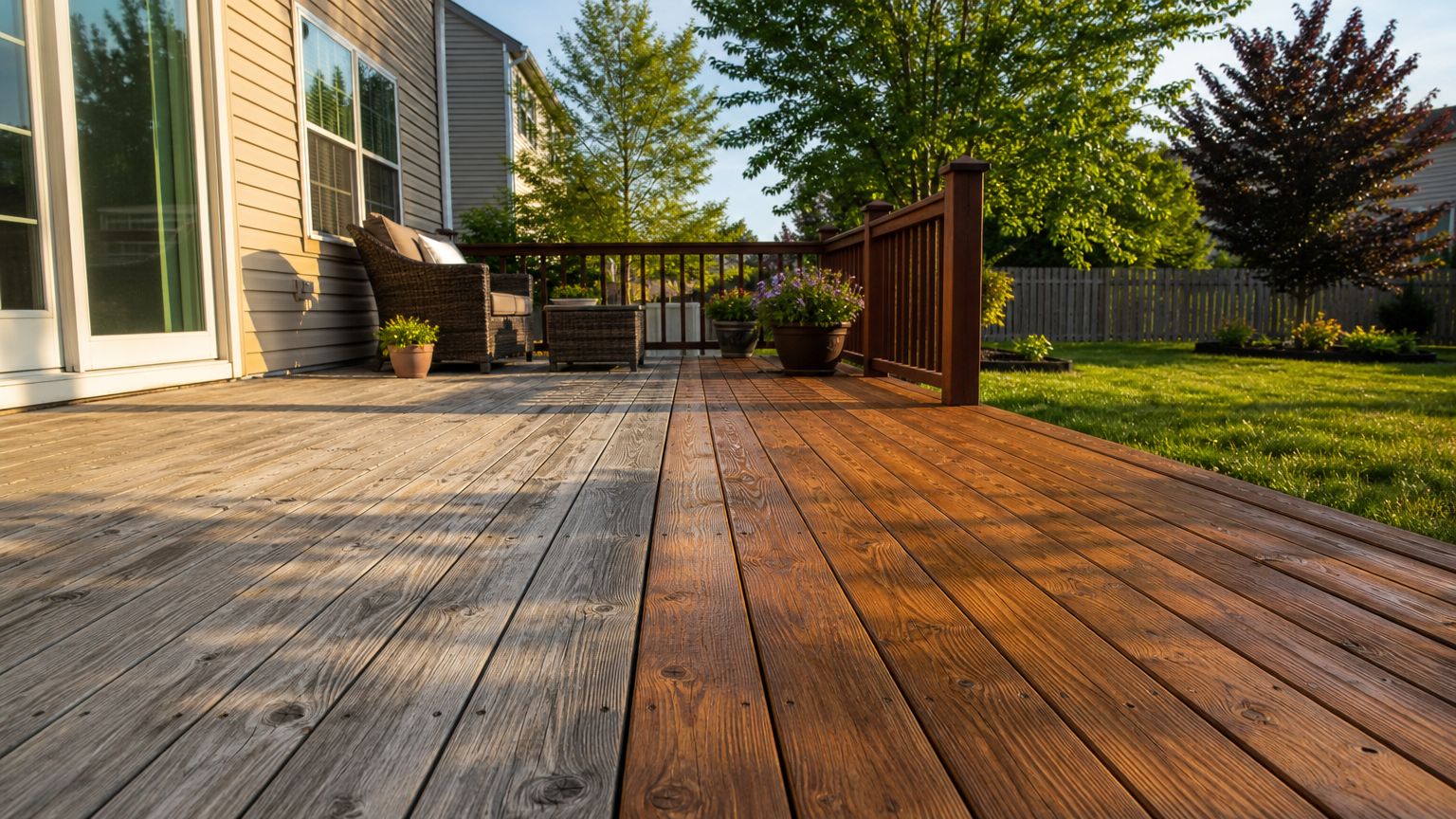
Woodbridge decks take a lot. Summer heat and humidity, morning dew that lingers under mature tree cover, the damp air that rolls in from the Occoquan Reservoir a few miles west. By early fall, a deck that looked fine in April can show a season’s worth of biological growth, UV graying, and stain wear.
Why Woodbridge Decks Age Faster Than You Might Expect
The Occoquan Reservoir is one of the defining geographic features of the western Woodbridge area. The reservoir and the Occoquan Creek corridor create a localized humidity zone that affects everything from how quickly exterior wood weathers to how fast biological growth establishes on surfaces in its proximity.
That humidity, combined with Prince William County’s Piedmont clay soil, creates a challenging environment for deck wood. Clay soil doesn’t drain quickly after rain — it holds moisture at the surface for days. Wood deck posts and the lowest deck boards sit closest to that damp soil, absorbing vapor. You’ll often see the worst staining and biological growth on the first two or three boards above grade and around post bases, even when the upper deck boards still look reasonable.
Communities along the Occoquan — parts of Lake Ridge, Occoquan Ridge, and neighborhoods backing up to Prince William Forest Park — can see biological growth (algae, mold, mildew) establishing on wood surfaces within a single season, particularly on north-facing or heavily shaded decks.
This isn’t inevitable with the right maintenance. A deck that gets cleaned annually and restained on a two-to-three-year cycle stays healthier than one that gets addressed every five to seven years when the deterioration becomes obvious.
The HOA Reality in Woodbridge Communities
This is the step that surprises the most homeowners in Prince William County planned communities: changing your deck stain color often requires prior approval from your HOA’s architectural review body, even if you’re going from one transparent stain to another.
Lake Ridge Community Association: Lake Ridge has one of the more active Architectural Control Committees (ACC) in the county. The ACC reviews exterior modifications that affect the community’s visual standards, and deck refinishing — when it involves a color change — typically falls within their review scope. If you’re going from a red cedar tone to a dark walnut, expect to submit an ARC application.
Montclair: Montclair’s HOA standards require homeowners to keep wood surfaces clean and in good condition. Color changes to deck staining are subject to their review process.
StoneBridge and similar communities: Newer Prince William County communities generally have clearly documented architectural guidelines with specific language about deck finishes, wood treatment, and acceptable stain types.
What to do before scheduling:
- Pull your HOA’s Design Guidelines document. Look for the section on “exterior modifications,” “decks,” or “wood finishes.”
- If a color change is involved, submit your ACC application with the proposed stain brand and color name before scheduling the cleaning crew.
- Get written approval in hand. ARC review in Prince William County communities typically takes one to three weeks — factor that into your timeline if you’re trying to complete the work before fall.
Routine maintenance staining — the same product type and similar color as what’s already on your deck — often doesn’t require ACC approval. But “often” isn’t “always,” and it varies by community. Check with your HOA manager first.
Cleaning First. That Part Isn’t Optional.
Every deck restoration project starts with cleaning. No exceptions.
Here’s why: wood that isn’t clean can’t accept stain properly. Mold residue, algae on the surface, UV-grayed fibers, and old stain residue all create a barrier that prevents new stain from penetrating the wood. Stain applied over any of these sits on the surface instead of soaking in — and it peels, sometimes within months.
A professional deck cleaning for a staining project includes:
- Assessment of existing stain condition — is it peeling, fading, or still mostly intact? This determines how much surface preparation is needed.
- Cleaning solution application — a wood-appropriate solution breaks down biological growth, loosens old stain residue, and opens the wood pores.
- Low-pressure rinse — enough pressure to flush the surface without raising wood grain.
- Wood brightening if needed — for decks with heavy gray oxidation or tannin staining, a brightener restores the natural pH and color of the wood before staining.
- Full dry time — the deck must reach below 15 percent moisture content before stain is applied. This typically takes 24 to 72 hours depending on temperature, humidity, and sun exposure.
The dry window is where DIY jobs fail most often. A deck surface looks dry but still holds moisture in the wood fiber. Stain applied over that moisture traps it inside, causing bubbling, peeling, and premature failure. In Woodbridge’s higher-humidity environment near the Occoquan, giving the wood adequate drying time is especially important.
Cleaning vs. Staining at a Glance
| Service | What It Covers | How Often |
|---|---|---|
| Deck cleaning only | Removes biological growth, dirt, old stain residue | Once per year, or as needed |
| Deck cleaning + restaining | Cleans, then applies new protective stain coat | Every 2-3 years for maintained decks |
| Wood brightening | Restores pH and natural color after heavy oxidation | Before staining on heavily grayed decks |
| Stain stripping | Removes failing solid or peeling stain entirely | Before switching stain type or doing full restoration |
| Post-service sealing | Adds a water-repellent finish coat over the stain | Optional for high-traffic or pool decks |
Woodbridge decks with deferred maintenance — five or more years without cleaning or restaining — often need a more intensive restoration that includes stripping the old failing stain before anything new goes on. The table above helps clarify what’s needed at different stages of deck condition.
When to Schedule Deck Work in Prince William County
The two windows that work for deck cleaning and staining in Northern Virginia:
Spring: April through June This is the most popular window for Woodbridge homeowners. Temperatures are in the right range for stain cure, humidity is manageable, and you’ll have the deck ready for summer use. Book in February or March — slots fill up by late March for the April-May window.
Fall: September through October The fall window is often more available and has one major advantage over summer: humidity drops significantly. That makes stain adhesion and cure more reliable. Fall staining also lets the new coat cure fully before winter freeze-thaw cycles, which are harder on bare or peeling stain than on properly protected wood.
What to avoid:
- July and August peak heat and humidity in Northern Virginia
- Scheduling during rain events or within 48 hours of rain
- Below 50°F temperatures (stain won’t cure properly)
If you’re trying to get HOA approval and complete the work before fall, start the approval process in August. Don’t wait until you have a crew scheduled and then discover the ACC review is still pending.
Deck Maintenance for Woodbridge’s Climate
A few practical notes for homeowners in this area:
Annual cleaning prevents the hard jobs. A quick professional cleaning each spring removes the season’s biological growth before it penetrates the stain and gets into the wood fiber. It’s less expensive than the full cleaning-and-stripping job that deferred maintenance requires.
Watch the post bases. In Prince William County’s clay soil environment, post bases take the most moisture damage. Check them each spring for soft spots or discoloration. A properly maintained post base lasts decades; a neglected one becomes a structural concern.
Note your HOA renewal cycle. Some Woodbridge communities send annual exterior condition letters in late summer. If you’ve been meaning to handle your deck, getting ahead of that letter is worth doing — it’s easier to schedule on your terms than under a deadline.
After a hard winter. The freeze-thaw cycles in Northern Virginia are hard on wood stain. After a winter with extended cold snaps, look at your deck boards in March. If the stain is peeling, cracking, or lifting in sections, that’s the time to schedule restoration before biological growth gets under the damaged stain.
Frequently asked questions
Do I need a permit to clean and stain my deck in Woodbridge?
No. Prince William County requires building permits for structural deck construction and major repairs, but routine cleaning and restaining is maintenance — not a permitted modification. The HOA color approval step is separate from the county permit process.
How much does deck cleaning and staining cost in Woodbridge?
For a typical two-story home with a standard-size deck, expect the cleaning-plus-staining service to run $600 to $1,800 depending on deck size, wood condition, and stain product used. Heavily neglected decks requiring stripping cost more. Get a specific quote based on your deck dimensions and current condition.
How long does the whole process take?
The service itself typically takes one to two days — cleaning one day, staining after adequate drying time (24-72 hours). With HOA approval time included, plan for one to three weeks total from approval to completion.
Can I stain my deck during summer?
July and August are not ideal in Northern Virginia. Peak summer humidity makes stain adhesion unreliable, and surface temperatures on decks in direct sun can exceed 100°F, causing stain to dry too quickly before it can penetrate. Spring and fall are significantly more reliable.
What’s the best stain for a Woodbridge deck?
Semi-transparent penetrating stains outperform solid stains in most wood types and Woodbridge’s climate conditions. They allow moisture to move through the wood rather than trapping it under a surface film. Ask about specific product recommendations based on your wood species — pressure-treated pine, cedar, and composite materials each have different best-practice products.
How long does stain last in this climate?
Well-applied stain on properly maintained wood in Prince William County typically lasts two to four years. Heavily shaded decks near the Occoquan with persistent moisture exposure may see wear at two to three years. Regular cleaning each year significantly extends stain life.
Ready to Schedule?
Diamond Power Washers serves Woodbridge and Prince William County with deck cleaning, deck restoration, and complete exterior cleaning services.
Read more about our deck cleaning service.
We also serve the rest of Northern Virginia from our Fairfax and Manassas locations — see residential power washing and our Woodbridge service area page for details.
or call 703-853-4738