
Surface-safe cleaning
Can You Pressure Wash a Concrete Pool Deck?
Yes. Concrete pool decks clean well with pressure washing at 2,000 to 3,000 PSI using a surface cleaner attachment to avoid stripe marks. The main precautions are keeping overspray out of the pool water, rinsing the surrounding grass, and avoiding high pressure near any cracks, expansion joints, or existing coating. Stamped or decorative concrete needs lower pressure, around 1,500 PSI.
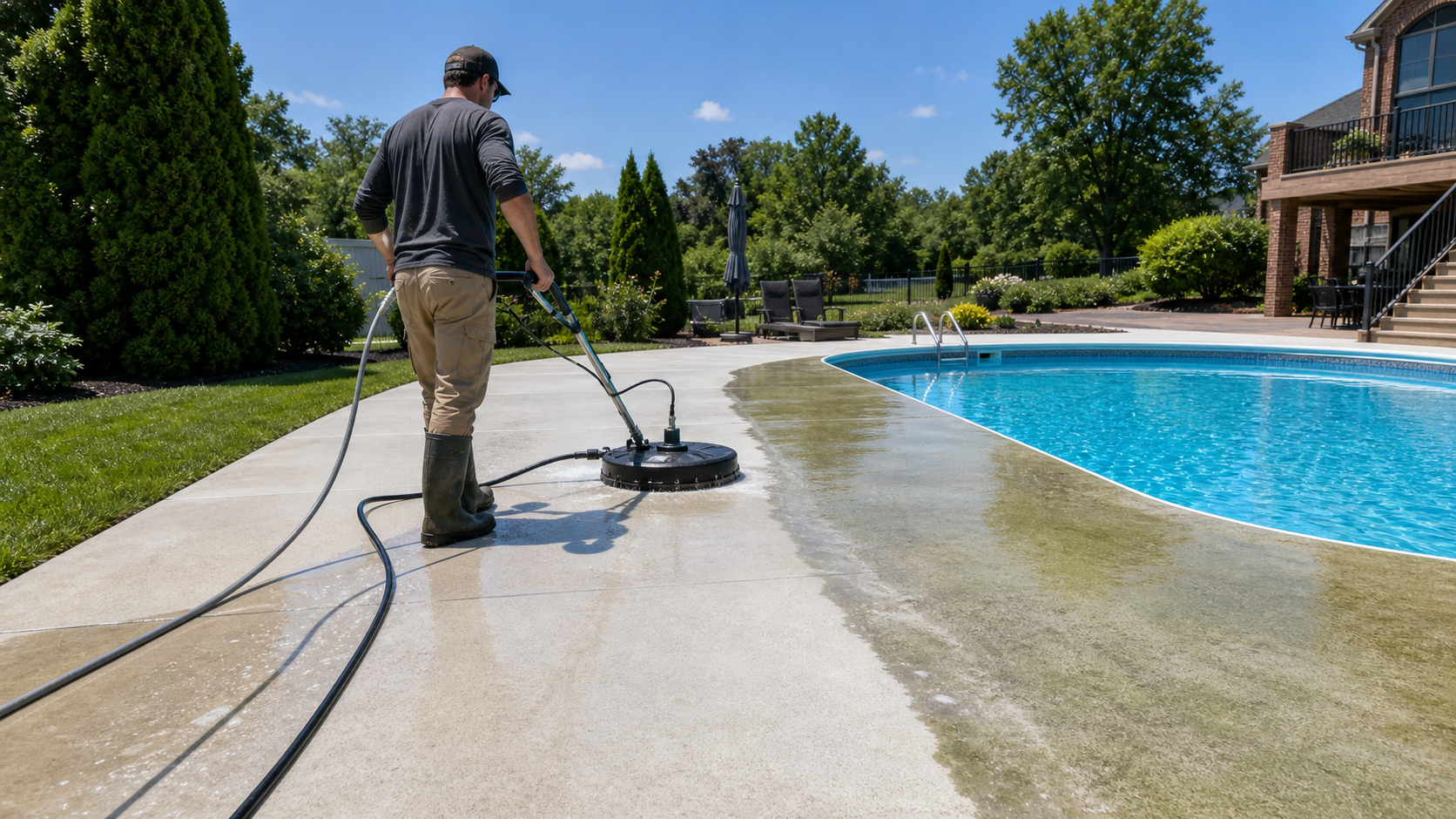
Pool decks take a particular beating. They’re exposed to water constantly, they pick up calcium and mineral deposits from splash-out, algae grows in the shaded wet spots near the coping, and in Northern Virginia they collect the same pollen and mold film as everything else during spring and summer. Pressure washing is the right tool for most of this — but a pool deck has a few specific considerations that set it apart from a standard driveway or patio.
This page covers the right settings for concrete pool decks, what to watch out for with decorative finishes, how to handle the pool water itself during the wash, and what to do about algae growth that keeps coming back near the water line.
What PSI should you use on a concrete pool deck?
Standard broom-finished concrete pool decks clean well at 2,000 to 3,000 PSI with a surface cleaner attachment. Stamped concrete, exposed aggregate, and any coated or painted pool deck surfaces need 1,200 to 1,800 PSI with a wider tip to avoid stripping the finish or loosening aggregate.
The surface cleaner attachment is worth emphasizing here. A standard wand at those PSI levels will leave visible stripe marks in the concrete — parallel lines of cleaned and slightly-less-cleaned surface that look fine when wet but stand out as the deck dries. A round surface cleaner spins the water stream in a consistent pattern and eliminates that problem entirely, leaving an even finish across the whole surface.
For broom-finish concrete in decent condition, the full 2,500 to 3,000 PSI range gets into the texture of the broom strokes and lifts out the embedded algae and grime that lighter pressure misses. For any surface with existing cracks, expansion joints showing gap or displacement, or areas where the concrete shows signs of spalling (surface flaking), lower the pressure and stay away from direct blasting into those spots — high pressure into a crack can worsen it.
Does pool water get contaminated during washing?
Some contamination is unavoidable since the deck borders the water, but the amounts are small enough that normal pool chemistry handles it without extra treatment. The bigger concern is any cleaning chemical used on the deck. Most standard degreasers used on concrete are safe at pool-side dilutions, but you should confirm with your pool service before using a chemical treatment on stained or heavily soiled sections near the water line.
In practice, most professional pressure washing of pool decks is done with water alone or with a biodegradable concrete cleaner at low concentration. The physical action of the pressure removes biological growth and surface grime without requiring heavy chemistry. If the deck has significant algae or mold staining that needs a pre-treatment, the chemical should be applied to dry sections away from the pool edge and allowed to dwell before rinsing — directing rinse water away from the pool where possible.
After any chemical treatment near a pool, a quick pool chemistry test before the next swim is sensible. In most cases, no adjustment is needed, but it’s worth confirming.
What about the lawn and landscaping around the pool deck?
Grass and plants adjacent to pool decks should be pre-rinsed before the wash and post-rinsed afterward to dilute any cleaning agent or high-mineral pool water that lands on them. A brief rinse with clean water before and after is enough for most plantings. Avoid letting a heavy flow of wash runoff pool and sit on grass areas, especially if any chemical pre-treatment was used.
Most Northern Virginia pool decks have a strip of grass or planting beds between the patio and the surrounding lawn. The runoff from the wash flows across the deck and onto those areas. For a simple water-only wash, the impact on grass is minimal. If any deck cleaner is used, the pre-rinse of vegetation slows absorption and the post-rinse dilutes what reached the soil. Healthy established grass handles this without visible damage in almost all cases.
How do you handle algae near the coping that keeps coming back?
Algae and mildew near pool coping grow back quickly because the area is constantly damp. Pressure washing removes the surface growth, but a post-wash application of a diluted sodium hypochlorite solution — similar to what is used in soft washing — treats the biological matter at the root level and slows regrowth. The same approach works for the shaded areas under pool equipment and stairs.
This is the same chemistry behind soft washing, just applied in a targeted way to the coping and surrounding concrete rather than to a whole house exterior. A low-concentration bleach and surfactant solution applied after washing, allowed to dwell for a few minutes, and then rinsed off removes the biological spores and slows the algae cycle. In Northern Virginia’s humid summers, this treatment typically keeps pool deck coping clean for 6 to 12 months before regrowth becomes visible again.
A standard pressure washing without the soft-wash follow-up on the coping will clean what’s visible today, but the algae typically returns faster because the root spores were physically dislodged rather than killed.
Ready to clean your pool deck this summer?
Diamond Power Washers serves pool deck owners across Fairfax, Manassas, Woodbridge, Chantilly, Reston, and Northern Virginia. Surface-safe methods, clear communication, and a 100% Satisfaction Guarantee.
Frequently asked questions
Can you pressure wash a concrete pool deck?
Yes. Concrete pool decks clean well with pressure washing at 2,000 to 3,000 PSI for standard broom-finish concrete, using a surface cleaner attachment for even results. Decorative or coated surfaces need lower pressure, around 1,200 to 1,800 PSI. Precautions include keeping chemical runoff away from the pool water, rinsing surrounding grass, and avoiding high-pressure streams directly into cracks or expansion joints.
Will pressure washing damage my pool deck?
Not if the right settings are used. Broom-finish concrete in good condition handles 2,500 to 3,000 PSI without damage. The risk areas are existing cracks, loose aggregate, spalling surface concrete, and any coated or painted finish. In those spots, lower the pressure and avoid blasting directly into the defect. A surface cleaner attachment also reduces the chance of leaving stripe marks.
Does pressure washing a pool deck contaminate the pool water?
Minor contamination is unavoidable since some water flows toward the pool edge, but normal pool chemistry easily handles it. The bigger consideration is any cleaning chemical used on the deck surface near the water. Most standard concrete degreasers are safe at pool-side dilutions, but confirm with your pool service before using any chemical treatment in that area. A post-wash pool chemistry check before swimming is a sensible step.
Why does algae keep coming back near my pool coping after washing?
Algae grows back quickly in constantly damp areas because pressure washing removes visible growth but doesn’t kill the root spores. A post-wash treatment with a diluted sodium hypochlorite solution, the same chemistry used in soft washing, kills the biological matter at the source and significantly slows regrowth. In Northern Virginia’s humid climate, this treatment typically extends the clean period to 6 to 12 months.
What PSI should I use to pressure wash my pool deck?
2,000 to 3,000 PSI for standard broom-finish concrete pool decks, using a surface cleaner attachment. Stamped concrete, exposed aggregate, or any pool deck with a coating or paint should be washed at 1,200 to 1,800 PSI with a wider fan tip to avoid stripping or damaging the decorative finish.
Is it safe to pressure wash around pool equipment like pumps and filters?
Yes, with basic precautions. Cover or protect electrical connections and the pump motor before washing near the equipment pad. Avoid directing the pressure stream directly at wiring, filter gauges, or any sealed connection points. The surrounding concrete pad can be washed normally. Most equipment housings are weatherproof but aren’t rated for direct high-pressure streams, so keep the wand moving and avoid dwelling on any single electrical component.
Should I seal my pool deck after pressure washing it?
Sealing is optional but worthwhile for concrete pool decks. A concrete sealer reduces water absorption, which limits the moisture that supports algae and mildew growth. It also makes future cleanings faster. The deck needs to be fully dry before sealer application, which typically means 48 to 72 hours of dry weather after washing. A penetrating sealer rather than a surface-coating sealer is generally better for pool decks because it doesn’t create a slippery film when wet.
Can pressure washing remove calcium deposits from a pool deck?
Pressure washing alone removes surface-level calcium deposits, which are the white or gray mineral buildups from pool splash-out. Heavy or deeply set calcium scale — the hard, crust-like buildup along the waterline — may need an acid-based concrete cleaner applied before washing to break down the mineral bond. A professional crew can assess whether the deposit is light enough for pressure alone or needs chemical pre-treatment first.
or call 703-853-4738