
Methods & safety
How to Prepare for a Pressure Washing Appointment
The morning of your appointment: move outdoor furniture and loose items away from the work area, close all windows and doors, and let the crew know about any fragile plants or things you want them to be careful around. That’s most of it. You don’t need to do any pre-scrubbing or disconnect any plumbing. The crew handles the rest.
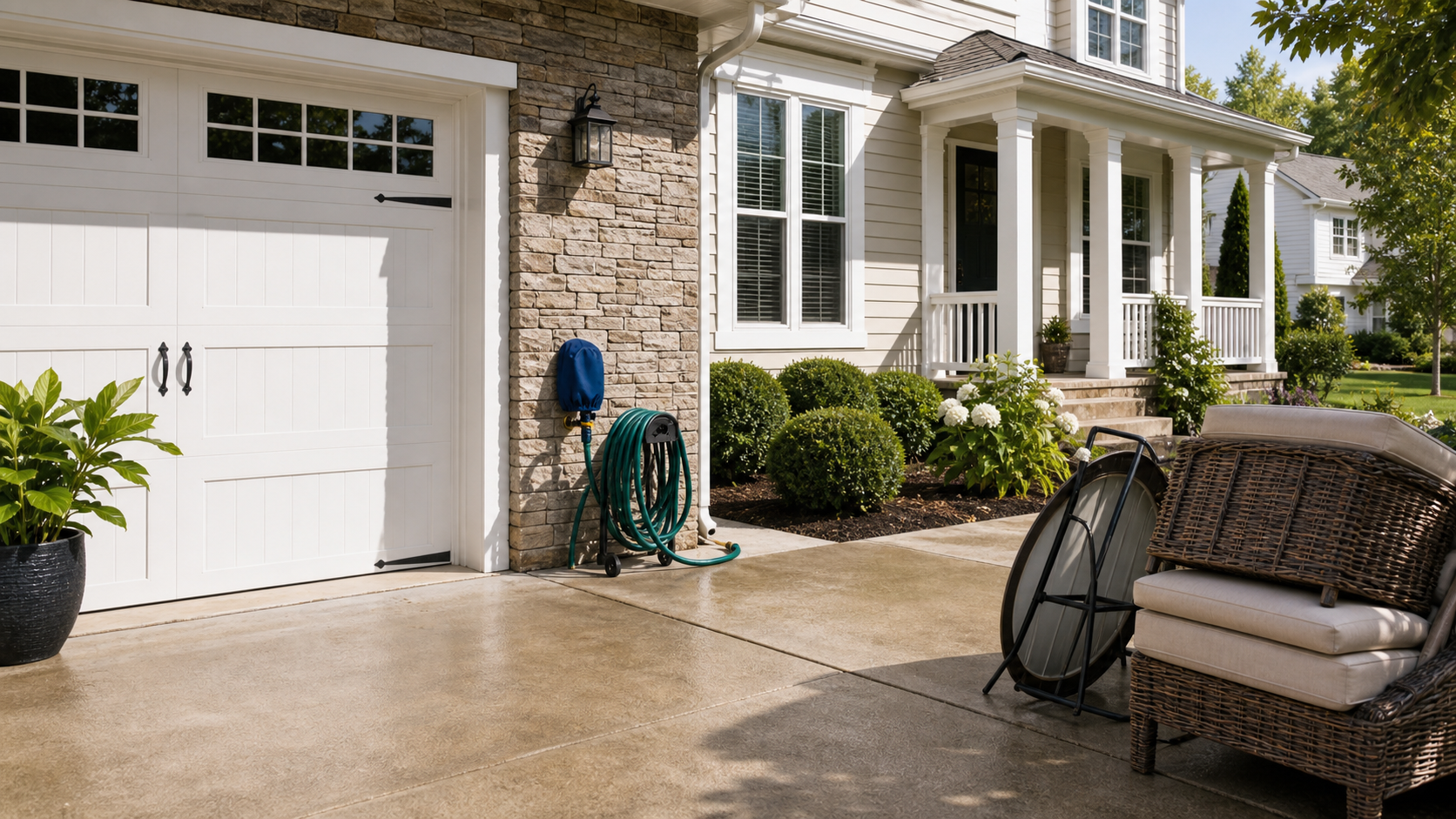
Move furniture and loose items out of the way
Move outdoor furniture, potted plants, doormats, yard decorations, garden tools, kids’ toys, and anything else that’s sitting on or near the surfaces being cleaned. High-pressure water and cleaning solutions can damage some materials, and even items that would survive the wash are just in the way of a thorough job. Setting them clear of the work area takes ten minutes and makes a real difference.
If you have large planters or heavy furniture you can’t move on your own, let us know before the appointment. We can work around fixed items, but the cleaner the area, the better the result. A chair that’s sitting against the house wall leaves a dirty shadow on the siding beneath it.
Potted plants along the house foundation can usually stay if they’re in the planting bed rather than directly against the wall. A good crew pre-wets plants before applying any cleaning solution and rinses them again after, which is one reason power washing is safe for plants when it’s done properly. If you have something particularly fragile, point it out and we’ll keep the solution away from it.
Close all windows, doors, and vents
All windows and doors should be fully closed, including any that you typically leave cracked for ventilation. This includes skylights, pet doors, and storm doors with screens. Water under pressure can find gaps that seem small, and a soaked windowsill or interior wall is a headache worth avoiding with a ten-second check before the crew arrives.
Dryer vents and bathroom exhaust vents that open to the exterior are worth covering with a piece of tape or a cloth if they’re directly in the path of the washing. This is especially true during a house wash where the soffit and fascia are being cleaned right above them. Most vents are fine; it’s the ones that point straight out into the spray zone that are worth protecting.
Garage doors should be closed unless the garage floor or interior is specifically part of the job. A soft wash of the exterior house wall occasionally sends mist into an open garage bay, and there’s usually no reason to risk it.
Outdoor electrical and electronics
Turn off exterior outlets or use their weatherproof covers if you have them. Outdoor speakers, security cameras mounted under eaves, string lights, and similar items can usually stay in place but should be noted when we arrive so we can work carefully around them. Anything plugged into an exterior outlet should be unplugged for the day.
Outdoor security cameras are almost always fine during a house wash. We work around them as standard practice. That said, if you have a camera or speaker in a direct spray path and you’re unsure about its water resistance, unhooking it for the afternoon is the conservative call. Most modern outdoor electronics are rated for rain, but pressure washing is a different level of exposure.
Electrical meters and breaker boxes are areas we work around carefully and never spray directly. This is standard professional practice, and one of the safety precautions professional power washers take on every visit. You don’t need to do anything special for those.
Pets, kids, and your own schedule
Keep pets indoors during the job, both for their safety and to keep them out of the work area. The noise from the equipment can startle animals, and wet surfaces plus pressure equipment near a pet is not a safe combination. Kids should also stay inside and away from the work zone. You don’t need to be home yourself during the job as long as we have access to the areas being cleaned.
If you have a locked gate we need to get through, make sure it’s unlocked before you leave. This is the most common prep item that people forget, and it’s the one that can genuinely delay or complicate the job. If you have a keypad or combination lock, text us the code the evening before the appointment.
You don’t need to be present the whole time. Most homeowners let us in, confirm what’s being done, and then go about their day. We’ll contact you when the job is complete and walk you through any areas you want to inspect before we leave. Most of this prep applies to any residential power washing visit, and you can read more about our overall methods and safety approach before your appointment.
What you do not need to do
- Pre-scrub anything. That’s what we’re for. You don’t need to spray, scrub, or treat anything before our arrival.
- Disconnect the water supply. We connect to your outdoor spigot (or bring our own supply for some jobs). Leave your water on.
- Move gutter guards. We work around or with gutter guards in place for a standard house wash.
- Clear your attic or garage. Interior spaces are not part of an exterior house wash.
- Apply any cleaners yourself first. Using a different product before our arrival can affect how our solution works and may create safety issues. Leave the surfaces as they are.
Ready to schedule your house wash?
We’ll walk you through any specific prep steps for your property when you book. Veteran-owned, fully insured, serving Fairfax, Manassas, Woodbridge, and all of Northern Virginia.
Frequently asked questions
How do I prepare for a pressure washing appointment?
Move outdoor furniture, potted plants, loose items, and yard decorations away from the work area. Close all windows, doors, skylights, and pet doors. Unplug anything connected to exterior outlets. Keep pets and kids inside during the job. Make sure any locked gates are open. That’s the full list for most homeowners.
Do I need to be home during the pressure washing?
Not necessarily. You don’t have to be present the whole time as long as the crew has access to the areas being cleaned. Most homeowners greet the crew at the start, confirm the scope, and then go about their day. We contact you when the job is complete if you’d like to do a walkthrough before we leave.
Should I move my car before the pressure washing crew arrives?
Yes, if your car is parked in the driveway or anywhere near the areas being cleaned. Cleaning solution and overspray can land on a vehicle, and while it’s usually no more than water at that distance, moving the car removes any doubt. If you’re having the driveway cleaned as part of the job, the car definitely needs to be out of the way.
Do I need to turn off my water before a pressure washing appointment?
No. Leave your water on. The crew connects to your outdoor spigot for the job. If there’s a reason we won’t use your water supply, we’ll let you know in advance. Turning off the water yourself would prevent us from connecting and would delay the job.
Will the cleaning solution hurt my plants?
Not when applied correctly. A professional crew pre-wets all plants and landscape beds near the work area before applying any solution, and rinses them again afterward. If you have something particularly fragile, let the crew know before they start. You can also move especially delicate container plants indoors or away from the wall for the day.
What if I have outdoor security cameras or speakers?
Point them out when the crew arrives so they can work carefully around them. Most outdoor electronics mounted under eaves are rated for rain exposure and hold up fine. If a camera or speaker is in a direct spray zone and you’re unsure about its water resistance, unhook it for the afternoon. We work around cameras as standard practice and don’t spray directly at them.
Should I pre-spray or pre-treat surfaces before the crew arrives?
No. Don’t apply any cleaners, degreasers, or other products to the surfaces before we arrive. Using a different product before our solution can affect how our treatment works and may create a chemical interaction we can’t anticipate. Leave the surfaces as they are and let us handle the preparation as part of the job.
or call 703-853-4738