
Methods & safety
Signs Your Home Needs Pressure Washing
The clearest signs are visible: dark streaks or green film on siding, black stains on the roof, grimy gutter faces, a chalky or faded exterior finish, slick walkways and steps, or a general dingy look that rain doesn’t fix. In Northern Virginia, spring pollen film and summer algae growth on north-facing walls are the most common triggers.
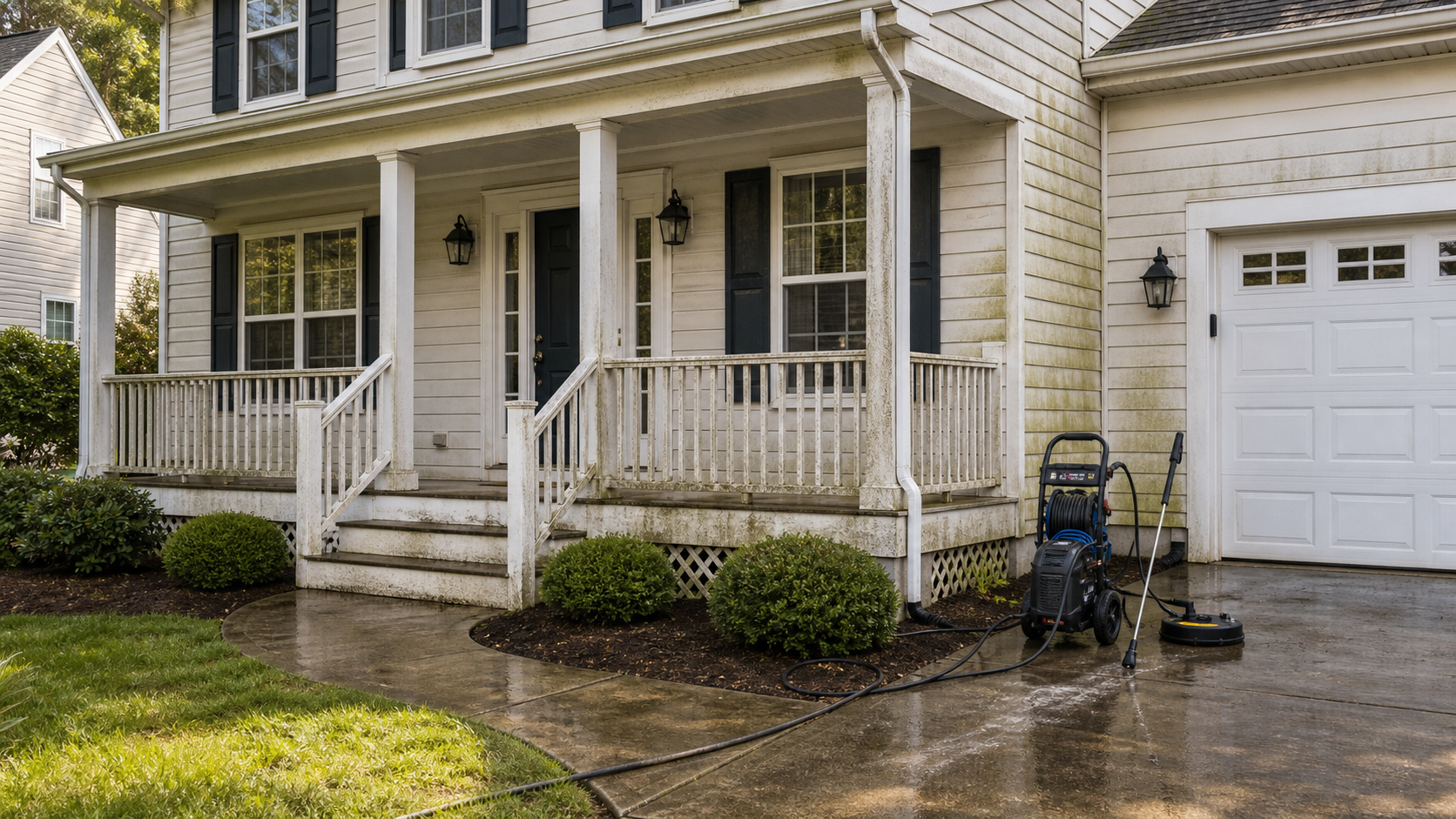
The most common visual signs
Green or gray streaks on siding are the most common call trigger for Northern Virginia homeowners. That discoloration is algae or mildew, and it grows wherever moisture sits long enough: north-facing walls, areas under large trees, and spots where gutters drip or overflow. Once you see it, it won’t go away on its own.
Black oxidation streaks down the face of gutters are another common sign. Gutters darken over time as oxidation from the aluminum or from debris runoff stains the outside face. These are cosmetic but noticeable from the street, and they come off cleanly with a house wash.
A chalky or faded finish on painted siding or fiber cement is a sign the surface is holding dirt and chalking paint at the same time. The chalk feels like dry powder when you run your hand along the wall. A soft-wash residential power washing visit removes the chalk and the built-up dirt, and it typically brightens the color noticeably without repainting.
Cobwebs, mud dauber nests, and wasp nests along soffits and under eaves are worth clearing as part of a regular wash. They accumulate faster than most homeowners realize, and a house wash clears them all in one pass.
Signs on walkways, steps, and driveways
A slick or slippery walkway or set of steps is one of the clearest signs that algae or moss has taken hold on the surface. This is both a cosmetic and a safety issue. Algae on concrete, stone, or brick becomes very slippery when wet, and the growth often isn’t obvious until the surface is damp. If your front steps feel slick after rain, that’s a direct signal.
Driveways and walkways that look permanently dark or discolored, even after rain, are usually carrying a layer of embedded dirt, tire marks, algae, or a combination of all three. A surface-cleaner pressure wash restores the original concrete color and removes the biological growth that rain can’t address. This is the same soft-wash chemistry that lets us remove moss, mold, and algae from a range of surfaces rather than just rinsing the top layer off.
Oil stains, rust spots, and tree sap are other surface signs on driveways. These require specific treatment beyond general pressure washing: degreasers for oil, acid-based or oxalic acid for rust. But noticing them is the first step, and a pressure washing visit is the right time to address them.
Northern Virginia-specific triggers
Spring pollen is the most dramatic annual trigger in Northern Virginia. From mid-April through early May, oak, pine, and other hardwood trees release a heavy pollen load that coats every exterior surface in a yellow-green film. Homes under or near large trees are the worst affected. The pollen film itself washes off easily, but if left on siding for weeks or months, it feeds algae growth that then takes hold. Our guide on how to get pollen off your house covers the timing and method for that spring rinse.
The summer humidity in Fairfax, Manassas, Woodbridge, and the surrounding area is a consistent driver of algae and mildew. A house that looks clean in late spring can develop noticeable green streaks on north-facing walls by August. This is especially true in neighborhoods with mature tree canopy and homes built in shaded lots.
After any nearby construction: a neighbor’s new addition, road work nearby, or a lot being cleared, exterior surfaces accumulate a fine dust that settles and bonds with the siding over time. It often looks like a general dullness rather than obvious dirt, but a wash makes an immediate difference.
Signs it’s time regardless of visible dirt
- It’s been more than two years. Even homes that look reasonably clean accumulate enough biological growth, oxidation, and embedded dirt in 18 to 24 months to benefit from a full wash.
- You’re planning to paint or stain. Any painting contractor will tell you: a thorough wash before painting is required for proper adhesion, done with the right methods and safety for each surface. Washing and painting are often scheduled back-to-back.
- You’re listing the home for sale. Curb appeal affects first impressions and listing photos. A wash costs far less than the price reduction a dirty exterior can cause.
- After a severe storm. Major storms deposit debris, tree sap, and organic matter onto every surface. A post-storm wash is a maintenance step worth taking after any significant weather event.
- A new neighbor or visitor notices before you do. We get used to how our own homes look. If someone else mentions the exterior is looking worn, it’s probably been that way longer than you realized.
Seeing any of these signs on your home?
We’ll take care of it with surface-safe methods and a satisfaction guarantee. Serving Fairfax, Manassas, Woodbridge, and all of Northern Virginia. Veteran-owned, fully insured.
Frequently asked questions
What are the signs that my home needs pressure washing?
The main signs are: green or gray streaks on siding (algae or mildew), black oxidation streaks on gutter faces, a chalky or faded exterior finish, slick or discolored walkways and steps, cobwebs and mud dauber nests under eaves, spring pollen film that hasn’t been rinsed, or a general dull look that doesn’t go away after rain. Any of these signals it’s time.
What do green streaks on house siding mean?
Green streaks on siding are algae or mildew growth, which thrives on moisture and shade. It’s most common on north-facing walls, areas under large trees, and spots where gutters drip or overflow. It won’t go away on its own; it grows over time until treated. Soft washing with a cleaning solution removes it and treats the growth at the source.
Why are my walkways slippery even when they look clean?
A light algae film on concrete, stone, or brick can be almost invisible in dry conditions but becomes dangerously slippery when wet. The surface doesn’t need to look visibly green to have enough algae to cause a slip hazard. If your front steps or walkway feel slick after rain, algae growth is almost certainly the cause, and a pressure wash will clear it.
My home looks fine from the street. Does it still need washing?
Possibly. Dirt and biological growth often accumulate gradually enough that you stop noticing them. A walk around the house to look closely at north-facing walls, under overhangs, and around the roofline tells a clearer story than the street view. If it’s been more than two years since the last wash, there’s likely enough buildup to benefit from a cleaning even if it isn’t dramatically obvious yet.
Is the spring pollen coating a reason to pressure wash?
Yes. The yellow-green pollen film that covers Northern Virginia homes every April and May should be rinsed off within a few weeks. Left on siding for months, pollen feeds algae growth that then takes hold on the surface. A post-pollen rinse or soft wash in late spring is a good annual maintenance step, especially for homes with significant tree cover nearby.
How can I tell if my driveway needs pressure washing?
If the concrete looks darker, dingier, or discolored compared to how it looked when new or last cleaned, it likely has a combination of embedded dirt, algae, and oxidation buildup. A simple test: wet a section with a garden hose. If it looks noticeably brighter when wet than when dry, the surface is holding dirt. A pressure wash with a surface-cleaner attachment will restore it.
What happens if I ignore these signs and don’t pressure wash?
Algae and mildew growth on siding continues to expand and can trap moisture against the surface, which contributes to paint failure and surface degradation over time. Slick walkways remain a slip hazard. Gutter streaks continue to darken. The cost of deferred maintenance adds up, and a surface that’s washed regularly is easier and less expensive to clean than one that’s been neglected for years.
or call 703-853-4738