
Surfaces & materials
Can You Pressure Wash a Screened Porch?
Yes, but a screened porch requires a split approach by zone. Screen mesh needs very low pressure, no more than 500 PSI with a 40-degree tip held well back, because the fiberglass or aluminum mesh tears or distorts under a direct high-pressure stream. The floor, ceiling, columns, and railing can handle more, matched to the material. You also need to remove or cover furniture, ceiling fans, and light fixtures before washing, and allow time to dry before using the porch again.
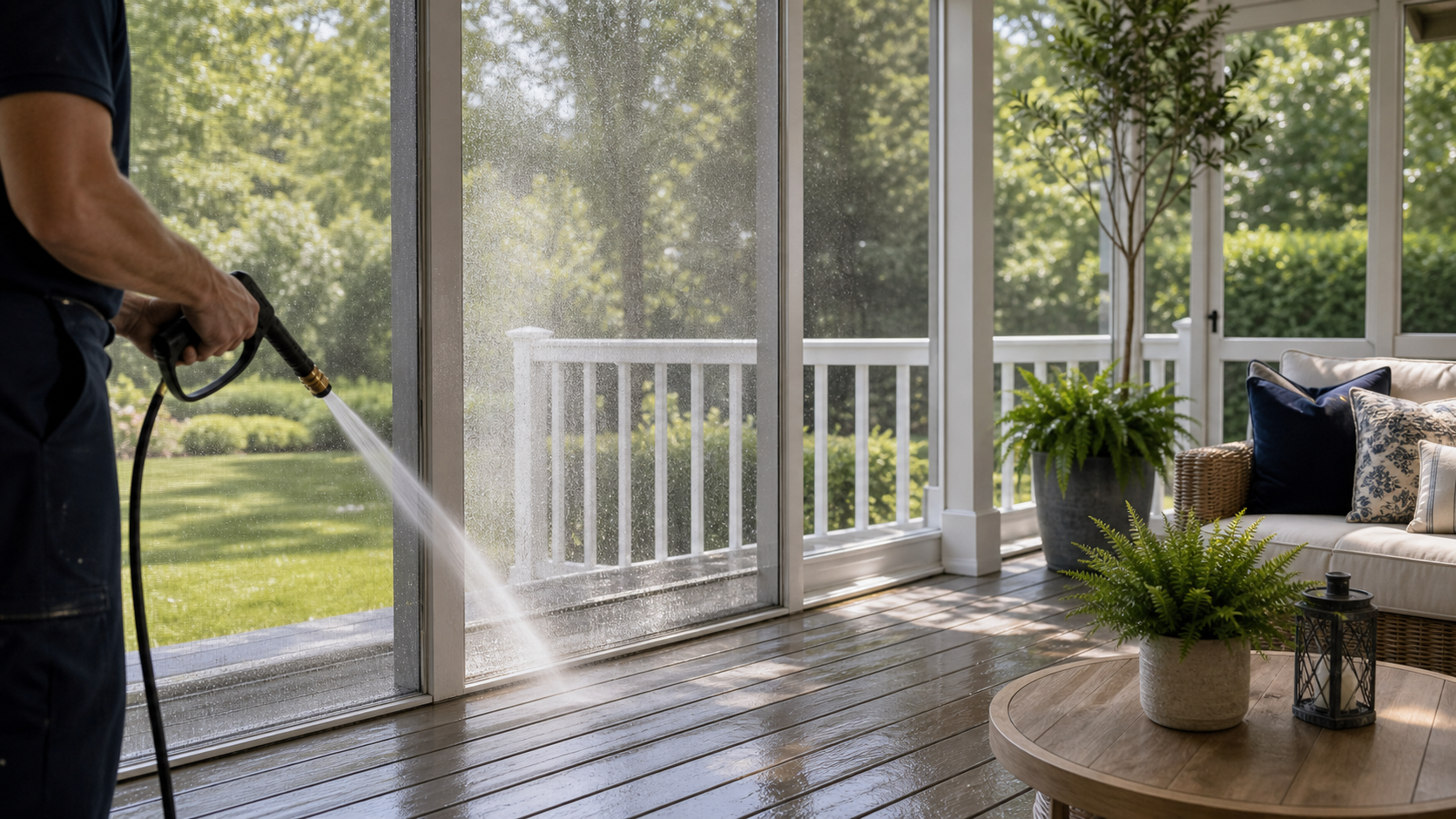
Cleaning screen mesh: why low pressure is the rule
Standard fiberglass screen mesh, the type used in nearly all residential screened porches in Northern Virginia, tears or distorts when hit with a direct high-pressure stream. The safe range is 300 to 500 PSI with a 40-degree fan tip, held 18 to 24 inches back from the screen, using a light sweeping motion from top to bottom. More pressure than that deforms the mesh weave, enlarges the openings, or punches holes that let insects through.
Aluminum screen mesh is slightly more durable than fiberglass and resists tearing better, but it still dimples or warps under a tight-tip stream. The same low-pressure approach applies. Pet-resistant screening and solar-shade mesh are heavier and can tolerate a bit more, but 500 to 800 PSI with a wide tip is still the right starting range, not standard washing pressure.
The good news is that screens don’t need high pressure to get clean. Pollen, dust, spider webs, and the fine grime that accumulates on screen mesh rinse off easily at low pressure once a mild detergent has had a moment to dwell. The goal is rinsing, not blasting. Approaching the screens the same way you would a car window gives better results than treating them like a concrete driveway.
Northern Virginia’s spring pollen season is particularly hard on screened porches. The fine yellow-green pollen from oak, maple, and pine coats screen mesh and reduces airflow visibly by late April or May. A gentle low-pressure wash in late spring removes the season’s buildup and opens the mesh back up for the summer months when you actually want the airflow. It’s the same pollen problem covered in our guide on getting pollen off your house, just concentrated on the screen weave.
Porch floors and structural surfaces
The floor, ceiling, columns, and railing of a screened porch are more durable than the screen mesh and can handle moderate pressure matched to their material. Concrete porch floors clean well at 1,500 to 2,500 PSI with a surface cleaner attachment or 25-degree tip. Composite decking floors need 1,000 to 1,500 PSI with a 25- or 40-degree tip, working with the grain. Vinyl or aluminum ceilings handle moderate pressure. Tongue-and-groove wood ceilings need a wider tip and care around soft spots or aging paint.
Columns and railings should be treated to their material. Vinyl columns and railings are durable and clean well at moderate pressure. Painted wood columns and railings need a gentler approach, especially if the paint is older and may be lifting at any edges, much like a wood fence that has weathered over the seasons. Brick or block columns can handle higher pressure and a rotary nozzle for any staining. If the porch floor is composite, our guide to cleaning a composite deck covers the settings for that material in more detail.
Ceiling fans mounted in the porch are a particular concern. The motor housing is not waterproof, and direct pressure washing of a ceiling fan can force water into the bearings or wiring and damage it. Take the fan down if possible. If it can’t be removed, disconnect the power at the breaker and cover the fan motor tightly with a plastic bag secured with tape before washing anything above waist height.
The same caution applies to light fixtures. Porch lights mounted on the ceiling or columns should be covered or removed before washing. Outdoor-rated fixtures are water-resistant, not waterproof, and a direct pressure stream into the fixture housing can force water past the gaskets and into the socket.
Prep before washing a screened porch
- Remove furniture, rugs, and cushions. Move all porch furniture, outdoor rugs, and cushions out before washing. Wet cushions take days to dry and develop mildew if left in place. Furniture moved to the yard or garage also lets you reach the floor completely.
- Cover or remove ceiling fans. Disconnect power at the breaker and either take the fan down or cover the motor and light kit tightly with a plastic bag secured with tape. Never wash directly at the fan motor or blade assembly.
- Cover electrical outlets and switches. Outdoor outlets are typically weatherproof but a pressure stream from close range can force water past the cover. Tape a piece of plastic over any outlet or switch panel before washing.
- Move potted plants away from the walls. Plants sitting against the wall or in corners block complete coverage and may be damaged if hit with even low-pressure rinse water. Move them to the yard.
- Note any torn or damaged screen panels. Existing tears or holes in the screen should be identified before washing so they’re not blamed on the wash afterward. Let your crew know where the pre-existing damage is before they start.
After the wash: drying and inspection
A screened porch dries faster than a wood deck or fence because air flows through the screens naturally. Two to four hours on a warm day is usually enough before bringing furniture back in. In humid or overcast conditions, allow a full half day. Walk the screens after drying to check for any new tears or sections where the mesh is sagging from the frame. Catching a damaged screen section right after washing is much easier than discovering it during mosquito season.
After the porch is dry and furniture is back in place, it’s a good time to check the screen frame condition at the corners and where the screen meets the floor. Screen frames that are bent, pulling away from the wall, or missing retainer spline can let insects in even if the mesh itself is intact. A fresh wash makes these inspection points easy to spot because the clean surface shows condition clearly.
Most Northern Virginia homeowners find that washing the screened porch once in late spring after the pollen season and once in early fall before closing it up for winter keeps it in consistently good shape. Porches under heavy oak canopy may benefit from a third wash in early summer if the tree debris is heavy. Because a porch mixes so many surfaces and materials in one small space, it’s often easiest to fold it into a full residential power washing visit rather than treating it as a standalone job.
| Porch zone | Recommended PSI | Tip angle | Notes |
|---|---|---|---|
| Screen mesh (fiberglass) | 300 to 500 PSI | 40 degrees | Hold 18 to 24 inches back; sweep top to bottom |
| Screen mesh (aluminum or pet-screen) | 500 to 800 PSI | 40 degrees | Still avoid tight tips; no zero or 15-degree |
| Concrete porch floor | 1,500 to 2,500 PSI | 25 degrees or surface cleaner | Same approach as driveway or walkway |
| Composite deck floor | 1,000 to 1,500 PSI | 25 to 40 degrees | Work with the grain; no rotary nozzle |
| Vinyl or aluminum ceiling | 800 to 1,200 PSI | 25 to 40 degrees | Cover any fans or lights first |
| Wood ceiling (T&G) | 500 to 800 PSI | 40 degrees | Check for soft spots; care around paint edges |
| Vinyl or aluminum railings | 800 to 1,500 PSI | 25 to 40 degrees | Rinse spindles from above to below |
| Painted wood railings/columns | 500 to 800 PSI | 40 degrees | Check paint condition; reduce if lifting at edges |
Get your screened porch ready for summer
We match the pressure and method to every zone on your porch, from the screen mesh to the floor. Veteran-owned, fully insured, and serving Fairfax, Manassas, Woodbridge, and Northern Virginia with a 100% satisfaction guarantee.
Frequently asked questions
Can you pressure wash a screened porch?
Yes, but the screen mesh and the structural surfaces need to be treated differently. Screen mesh needs very low pressure, 300 to 500 PSI with a 40-degree tip held 18 to 24 inches back. The floor, ceiling, and railings can handle more pressure depending on the material. You’ll also need to remove furniture, cover ceiling fans and light fixtures, and allow the porch to dry before bringing everything back in.
What PSI is safe for screened porch screens?
300 to 500 PSI with a 40-degree fan tip for standard fiberglass screen mesh. Aluminum mesh and pet-resistant screening can tolerate up to 800 PSI, but should still use a 40-degree tip. The wand should be held 18 to 24 inches from the screen and kept moving in light sweeping passes from top to bottom. Never use a zero-degree or 15-degree tip on any screen mesh.
Will pressure washing tear or damage screen mesh?
Only if the wrong settings are used. Standard fiberglass screen mesh tears or distorts under high pressure or from a tight-tip stream at close range. At 300 to 500 PSI with a 40-degree tip and proper wand distance, the mesh rinses clean without damage. The rule is to approach screens as you would a car window: rinsing, not blasting. Most screen damage from washing comes from using too much pressure or getting the wand too close.
How do you clean a screened porch floor?
Match the approach to the material. Concrete floors clean well at 1,500 to 2,500 PSI with a surface cleaner attachment or 25-degree tip, the same way you’d clean a driveway or sidewalk. Composite decking floors need 1,000 to 1,500 PSI with a 25- or 40-degree tip, working with the grain. The floor can handle significantly more pressure than the screens, so the two zones need to be addressed separately rather than at one blanket setting.
What should I remove from a screened porch before pressure washing?
Remove all furniture, outdoor rugs, and cushions. Cover or remove ceiling fans by disconnecting power at the breaker before covering the motor. Cover electrical outlets and switch panels. Move potted plants away from the walls and corners. Note any pre-existing screen tears or damage before the wash begins so there’s no confusion afterward about what was already damaged before the crew arrived.
How long does it take for a screened porch to dry after washing?
Two to four hours on a warm, breezy day. Screened porches dry faster than enclosed spaces because air flows through the screen mesh naturally. In humid or overcast conditions, allow four to six hours before bringing furniture back. Take advantage of the dry time to walk the screen panels and inspect for any tears or sagging sections while the porch is clear and easy to check.
What’s the best way to clean a screened porch ceiling?
The right approach depends on the ceiling material. Vinyl or aluminum porch ceilings handle moderate pressure, 800 to 1,200 PSI with a 25- or 40-degree tip, after covering or removing any fans and light fixtures. Tongue-and-groove wood ceilings need a gentler approach, 500 to 800 PSI with a 40-degree tip, especially around older paint. Always cover fan motors and light fixtures before washing anything overhead, regardless of how weatherproof they appear.
or call 703-853-4738