
Surface-safe driveway cleaning
Concrete vs. Asphalt Driveway: Does the Surface Type Change How Power Washing Is Done?
Yes, significantly. Concrete driveways tolerate 2,500 to 3,500 PSI and handle degreasers well. Asphalt is softer and more porous — it needs lower pressure, around 1,500 to 2,000 PSI, and cannot be treated with strong degreasers or high-heat water, which soften the asphalt binder. The cleaning approach, pressure settings, and chemical choices all differ between the two materials.
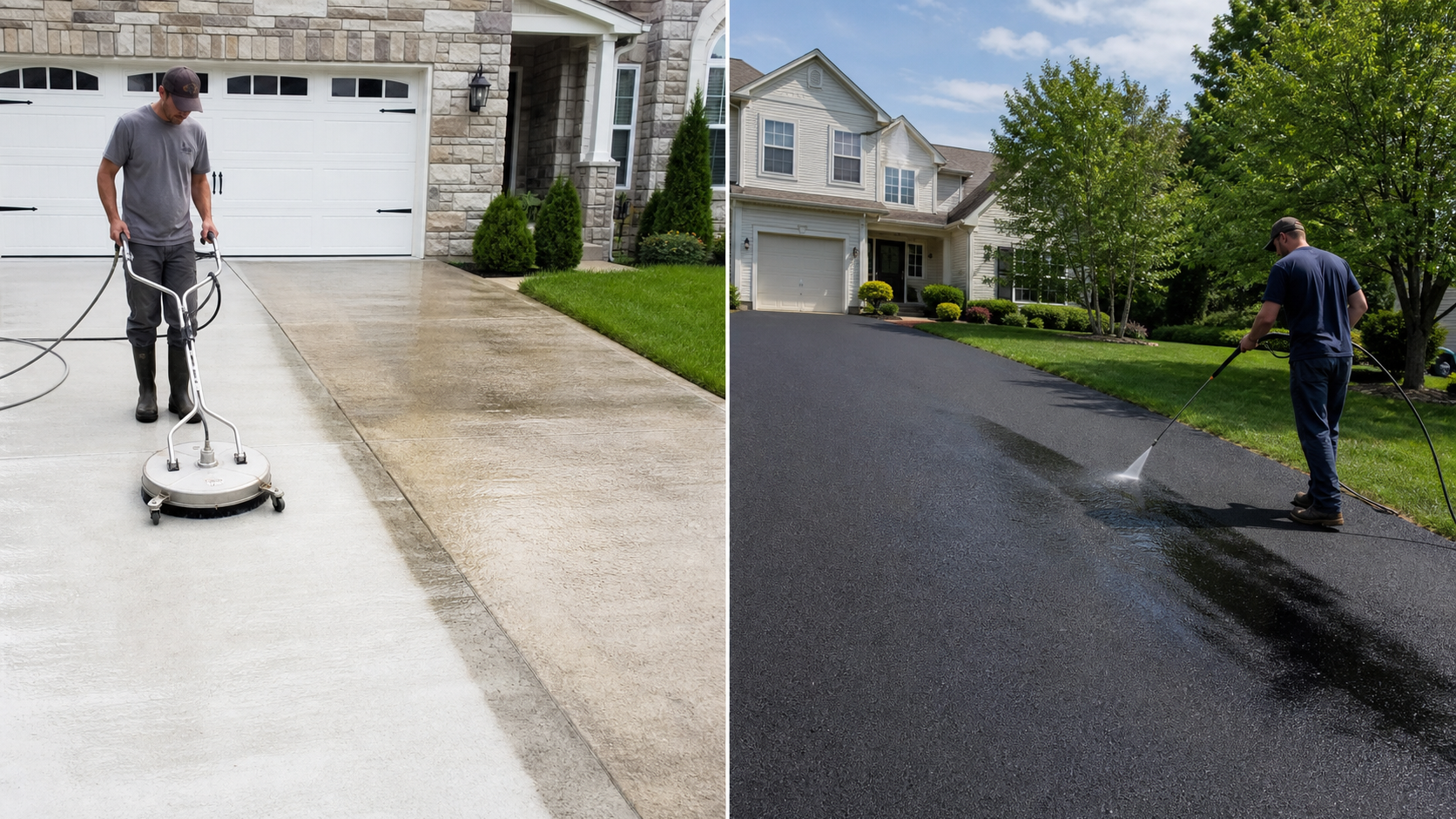
In Northern Virginia’s older neighborhoods, you’ll find both concrete and asphalt driveways on the same street. Concrete tends to dominate in newer subdivisions — Gainesville, Haymarket, and parts of Chantilly — while asphalt driveways are more common in established areas of Manassas, Woodbridge, and Fairfax where homes were built in the 1970s and 1980s.
Both surfaces get dirty. Both collect oil stains, algae, pollen, and tire marks. Both benefit from regular pressure washing. But the crews and equipment that clean them correctly treat them differently, and it matters. Using concrete settings on asphalt can strip aggregate or soften the surface. This page explains what changes and why.
What makes concrete and asphalt different to wash?
Concrete is a rigid, porous mineral surface that tolerates high pressure and most concrete-safe degreasers. Asphalt is flexible and petroleum-based — it contains bitumen as its binder, which is susceptible to solvent-based degreasers, high water temperatures, and excess pressure that can dislodge the aggregate or damage the surface sealer.
The core difference is the binder material. Concrete is held together with Portland cement, which is hard and mineral-based. Asphalt is held together with bitumen, a petroleum product that remains slightly flexible even when fully cured — that’s what allows it to flex through freeze-thaw cycles without cracking as readily as concrete. But that same flexibility makes asphalt more vulnerable to certain cleaning agents and excessive pressure.
Asphalt also tends to be darker, which means it absorbs more heat on sunny days. A hot, dark asphalt driveway in a Northern Virginia August is already soft relative to its winter state. Applying high-pressure hot water to an already-warm asphalt surface can accelerate softening and pull aggregate from the surface.
| Factor | Concrete driveway | Asphalt driveway |
|---|---|---|
| Recommended PSI | 2,500 to 3,500 PSI | 1,500 to 2,000 PSI |
| Tip type | 15- or 25-degree, or surface cleaner | 25- or 40-degree (wider fan) |
| Water temperature | Cold or hot — either works | Cold water only |
| Degreasers | Concrete-safe alkaline degreasers safe | Petroleum-solvent degreasers only — avoid alkaline cleaners that can attack the asphalt binder |
| Sealer after washing | Optional penetrating sealer | Recommended: fresh sealer after washing extends pavement life |
| Common problems | Rust stains, oil stains, efflorescence | Oil stains, tire marks, oxidation, cracking |
How is concrete driveway washing done?
Concrete driveways are washed at 2,500 to 3,500 PSI using a surface cleaner attachment for an even finish, or a 15- to 25-degree tip for targeted work on stains. Oil stains typically need a pre-treatment with an alkaline concrete degreaser before pressure is applied. Rust stains need an oxalic or phosphoric acid treatment. High PSI and the right chemistry together handle most concrete staining problems.
The surface cleaner attachment is the standard tool for a driveway wash on concrete. It eliminates the stripe marks that a handheld wand leaves at high pressure, produces an even circular cleaning pattern, and moves faster than a wand across a full two-car driveway. For a normal maintenance wash — algae, pollen, general traffic grime — the surface cleaner at 2,500 to 3,000 PSI handles everything without a pre-treatment chemical.
Stains are the exception. A motor oil stain on concrete has soaked into the porous surface and needs a degreaser dwelling for 5 to 10 minutes to break up the oil before the pressure can lift it. Rust from irrigation heads or a forgotten piece of metal furniture needs an oxalic acid application to dissolve the iron oxide bond. Those pre-treatments are what separate a professional concrete cleaning from a homeowner rinse.
How is asphalt driveway washing done differently?
Asphalt is washed at lower pressure — 1,500 to 2,000 PSI — using wider fan tips to spread the force over a larger area. Cold water only. No alkaline or solvent-based degreasers that would attack the petroleum binder. For oil stains on asphalt, the safest approach is a dedicated asphalt-safe degreaser, which is formulated to clean the oil without harming the bitumen matrix.
The most common mistake with asphalt is using the same pressure or chemicals that work fine on concrete. A 25-degree tip at 3,000 PSI on a warm asphalt surface on a summer afternoon can pull up surface aggregate and leave pitting that compromises the waterproofing of the pavement. The same volume of water spread through a 40-degree tip at 1,500 PSI gets the surface clean without that risk.
Post-wash sealing is more important for asphalt than for concrete. Asphalt sealer protects the bitumen binder from UV oxidation and water infiltration. After a thorough washing, an asphalt driveway is fully clean and ready for fresh sealer application once it dries — typically 24 to 48 hours. A freshly sealed asphalt driveway in good condition extends pavement life and is noticeably darker and more uniform in appearance.
Need your driveway cleaned the right way?
Diamond Power Washers handles both concrete and asphalt driveways across Fairfax, Manassas, Woodbridge, Gainesville, and Northern Virginia. We match the settings and chemistry to your surface — not the other way around.
Frequently asked questions
Does it matter if my driveway is concrete or asphalt when it comes to power washing?
Yes, significantly. Concrete handles high pressure and most concrete-safe degreasers without issue. Asphalt is a petroleum-based surface that’s more vulnerable to high pressure, hot water, and solvent-based or alkaline chemicals that can damage the bitumen binder. A professional crew uses different pressure settings, tip angles, and cleaning products depending on which surface they’re working on.
What PSI is safe for asphalt driveway pressure washing?
1,500 to 2,000 PSI with a 25- to 40-degree fan tip is the safe range for most asphalt driveways. Higher pressure than 2,000 PSI risks pulling surface aggregate from the asphalt matrix, especially on older pavement or driveways that haven’t been resealed recently. Cold water only — hot water softens the bitumen binder and increases the risk of surface damage.
Can you use a surface cleaner attachment on asphalt?
Yes, but at the lower pressure appropriate for asphalt. Surface cleaners produce an even finish without stripe marks, which is as useful on asphalt as on concrete. The pressure setting on the machine must be dialed to the 1,500 to 2,000 PSI range before using the surface cleaner on asphalt. Running a surface cleaner at concrete PSI on asphalt causes the same surface damage as a high-pressure wand would.
How do you remove oil stains from an asphalt driveway?
Use an asphalt-safe degreaser specifically formulated to clean oil from asphalt without harming the bitumen binder. Apply it to the stain, allow it to dwell for the manufacturer’s recommended time, then rinse at 1,500 to 2,000 PSI. Avoid alkaline concrete degreasers and petroleum solvents — both can break down asphalt’s binder material. Very old, deep oil stains in asphalt may not fully lift, but fresh stains treated promptly respond well.
Should I seal my asphalt driveway after pressure washing?
Yes, sealing is recommended after washing. A clean asphalt surface is the ideal base for fresh sealer application. Sealing protects the bitumen binder from UV oxidation and water penetration, which are the two main causes of asphalt deterioration over time. Allow the driveway to dry fully — at least 24 to 48 hours — before applying sealer. A sealed asphalt driveway resists staining better and extends pavement life.
Do concrete and asphalt driveways need the same cleaning frequency?
Generally similar frequency — once a year or every other year for a maintenance wash, more often if there are active staining sources like oil drips or heavy biological growth. Asphalt driveways in Northern Virginia benefit from at least an annual wash before resealing. Concrete driveways with active oil or rust staining should be cleaned as needed rather than waiting for a scheduled interval.
Is hot water pressure washing safe for asphalt driveways?
No. Hot water softens the bitumen binder that holds asphalt together. This is especially true in summer conditions in Northern Virginia, where a dark asphalt surface in direct sun may already be close to the softening point on a hot afternoon. Asphalt should always be washed with cold water only, regardless of the season.
How can I tell if my driveway is concrete or asphalt?
Concrete is gray or light tan, rigid, and made of a cement-and-aggregate mix that doesn’t flex. Asphalt is dark black or dark gray, slightly flexible if pressed, and often has a slight petroleum smell in hot weather. Asphalt driveways commonly show a uniform fine-textured black surface when new and fade to grayish-black as they age without sealing. If you’re still unsure, a professional crew can confirm the material on arrival.
or call 703-853-4738