
Surfaces & materials
Can You Pressure Wash a Wood Fence?
Yes, but pressure and technique matter more with wood than with almost any other exterior surface. Wood fences need a lower PSI setting and a wider fan tip than concrete or brick, with the wand kept moving. Done right, pressure washing cleans the fence thoroughly and preps it for staining or sealing. Done wrong, it raises the grain, splinters boards, and does real damage.
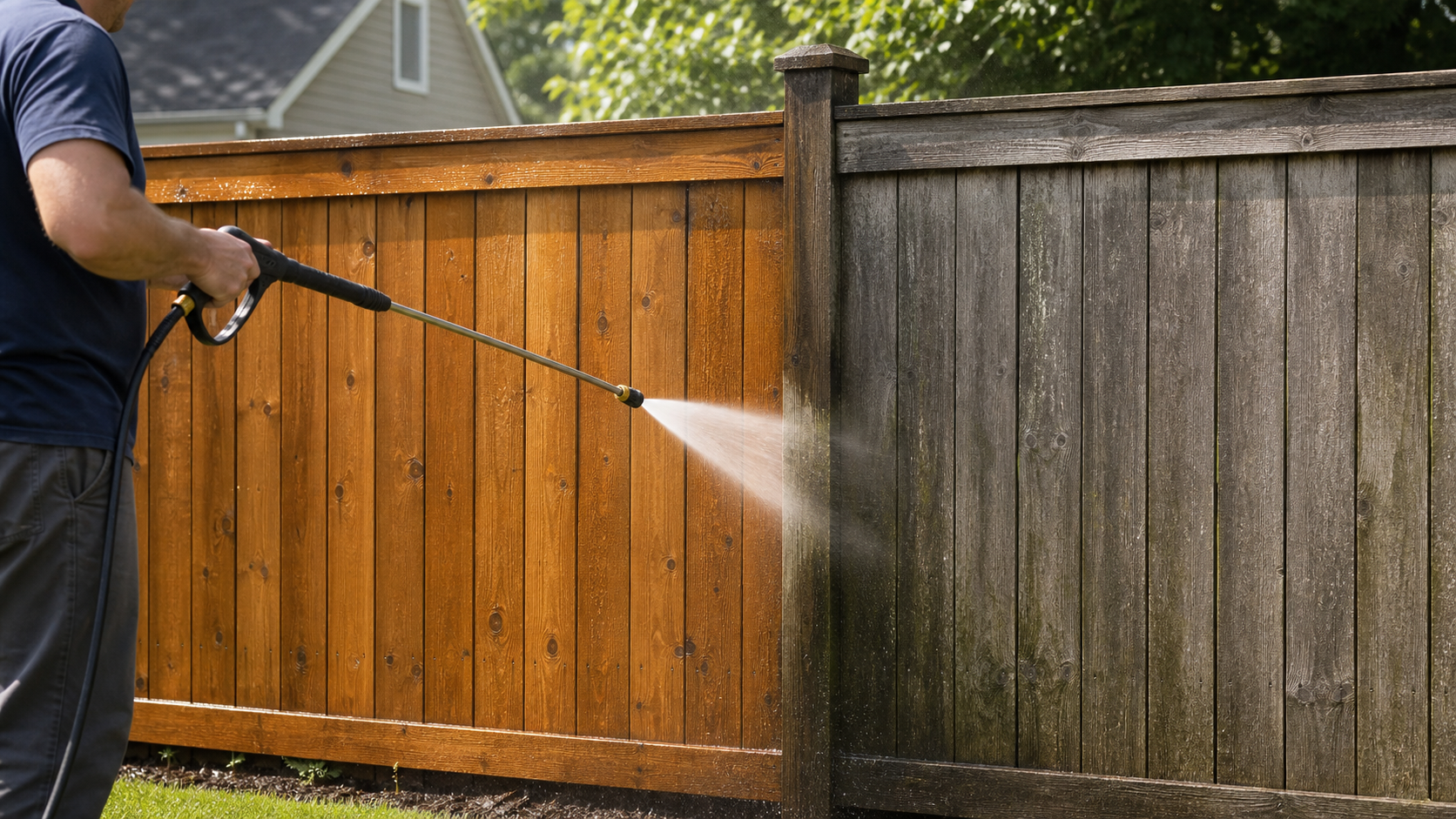
Pressure and tip settings for wood fences
Most wood fences clean safely at 500 to 1,200 PSI with a 25- or 40-degree fan tip. Pressure-treated pine, the most common residential fence material in Northern Virginia, is soft enough that a tight zero-degree or 15-degree tip at high pressure will raise the grain or splinter boards. Keep the wand moving, maintain at least 8 to 12 inches of distance from the surface, and work with the grain, not across it.
The actual setting depends on the fence’s condition and age. A newer, sound fence in good shape can tolerate moderate pressure with good results. A fence with older, weathered boards or any rot starting needs a gentler approach. If boards are soft when pressed, they’re too degraded to take any significant pressure without further damage.
Cedar and redwood are slightly harder and more naturally rot-resistant than pine, and they hold up to cleaning better as a result. Even so, the same general rule applies: moderate pressure with a wide tip is always the right starting point for any wood surface, and you adjust down from there rather than up. Matching pressure to the material this way is the heart of how we approach every surface and material we clean.
Common wood fence types in Northern Virginia
The vast majority of residential privacy fences in Fairfax, Manassas, and the surrounding area are pressure-treated southern yellow pine, installed as dog-ear boards on standard rails. You’ll also see cedar privacy fences, painted or primed board-on-board fences, and split-rail fences in more rural lots. Each cleans well at the right settings, with cedar being the most forgiving and raw pine the most susceptible to grain raise from overly aggressive washing.
Painted wood fences add another variable. If the paint is in good condition, moderate pressure cleans the surface without disturbing it. If the paint is peeling or blistering, high pressure will pull it off, which might be intentional if you’re prepping to repaint, or it might be a problem if you’re not. Tell us the fence condition and your goals before we start so we set the right expectations.
Split-rail fences with rough or textured wood should be cleaned with the lowest pressure settings and checked closely for soft or rotten sections before washing. Pressure on a rotten rail can break it entirely.
Prepping the fence before washing
- Check for rot. Press boards at the base and at any knots. Soft, spongy spots indicate rot, and pressure washing won’t help those. Those boards may need replacing before or after the wash.
- Apply a wood cleaner if needed. Gray, weathered wood benefits from a wood brightener or oxalic acid solution applied before rinsing. A mildewcide in the mix also helps remove moss, mold, and algae at the source. It restores the natural color and opens the grain so stain or sealer penetrates evenly afterward.
- Clear vegetation from the base. Vines, overgrown shrubs, and ground cover pressing against the boards hold moisture and contribute to rot. Clear as much as you can before the crew arrives.
- Move planters or decorations off the fence. Anything hung on the fence panels or resting against them should come down to allow complete access.
What comes after the wash
A freshly washed wood fence should dry for at least 48 to 72 hours before stain or sealer is applied. Applying either product to wet or damp wood traps moisture inside the board and causes the coating to peel or fail within a season. In summer in Northern Virginia, two sunny days is usually enough. In cooler weather or in shady areas, allow an extra day to be sure.
After drying, staining or sealing the wood is the step that protects the fence and extends the work you’ve put into cleaning it. A cleaned fence without a protective coating weathers back to gray within a year or two in Northern Virginia’s humidity. A properly sealed or stained fence holds its color and resists moisture for three to five years before the next maintenance cycle. If your yard also has a composite deck, note that it cleans very differently from wood, as our guide to cleaning a composite deck explains, so it’s worth handling both as part of the same residential power washing visit.
If you’re not sure whether your fence needs staining or just sealing after washing, the fence washing vs. staining guide covers that decision in detail, including when to seal versus stain and how to tell the difference before you start.
| Wood fence type | Recommended PSI range | Tip angle | Notes |
|---|---|---|---|
| Pressure-treated pine (dog-ear) | 600 to 1,000 PSI | 25 to 40 degrees | Most common; keep wand moving |
| Cedar privacy fence | 800 to 1,200 PSI | 25 to 40 degrees | More forgiving; still avoid tight tips |
| Painted wood fence | 500 to 800 PSI | 40 degrees | Check paint condition first |
| Split-rail / rough wood | 400 to 600 PSI | 40 degrees | Check for rot before washing |
| Older, weathered pine | 400 to 700 PSI | 40 degrees | Reduce if boards feel soft |
Ready to restore your wood fence?
We match the pressure and method to your fence type and condition. Veteran-owned, fully insured, and serving Fairfax, Manassas, Woodbridge, and Northern Virginia with a 100% satisfaction guarantee.
Frequently asked questions
Can you pressure wash a wood fence?
Yes, with the right settings. Wood fences clean well at 500 to 1,200 PSI with a 25- or 40-degree fan tip, with the wand kept moving and held 8 to 12 inches from the surface. Too much pressure raises the grain, splinters boards, and can cause real damage. Matching the pressure to the wood type and condition is the key to a good result.
What PSI should I use to pressure wash a wood fence?
500 to 1,200 PSI, depending on the wood type and condition. Soft or weathered pine needs the lower end of that range. Cedar and harder woods can handle the higher end with a wide fan tip. Start low and increase only if needed. A zero-degree or 15-degree tip at high pressure will raise the grain and damage most wood fence materials.
Will pressure washing damage my wood fence?
Only if the wrong settings are used. High pressure with a tight tip, holding the wand too close, or spraying across the grain can raise the wood grain, splinter boards, or strip paint. Boards that are already rotted can break under any significant pressure. Done at the right PSI with a wide fan tip and proper wand distance, pressure washing cleans the fence without damaging sound boards.
How long should a wood fence dry before staining after pressure washing?
At least 48 to 72 hours in warm, sunny conditions. Applying stain or sealer to damp wood traps moisture inside the board and causes the coating to peel or fail quickly. In cooler weather or shaded areas, allow an extra day. A moisture meter reading below 15 to 18 percent is the surest check that the wood is ready for staining.
Do I need to use a wood cleaner before pressure washing my fence?
For fences that are gray, heavily weathered, or stained with tannin bleed (dark staining from knots), applying a wood brightener or oxalic acid solution before rinsing significantly improves the result. It restores natural color, opens the grain, and gives stain something to absorb into evenly. For recently painted or lightly soiled fences, a straightforward pressure wash without pre-treatment is usually sufficient.
Can pressure washing remove mold and mildew from a wood fence?
Yes. A wood cleaner or mildewcide solution applied before the rinse kills the mold spores and loosens the growth so it rinses away cleanly. Pressure alone removes the visible discoloration but may leave spores that accelerate regrowth. A chemical pre-treatment followed by pressure rinsing gives a longer-lasting clean result on wood surfaces with mold or mildew.
Should I seal or stain my fence after pressure washing?
Yes. A freshly cleaned wood fence without a protective coating weathers back to gray in Northern Virginia’s humidity within a season or two. Staining adds color and protects the wood; sealing is a clear protective coat without color change. Both are far easier to apply after washing than before, and both extend the fence’s life significantly. See our fence washing vs. staining guide for help choosing between the two.
or call 703-853-4738