
Surface-safe cleaning
How to Remove Artillery Fungus From Siding
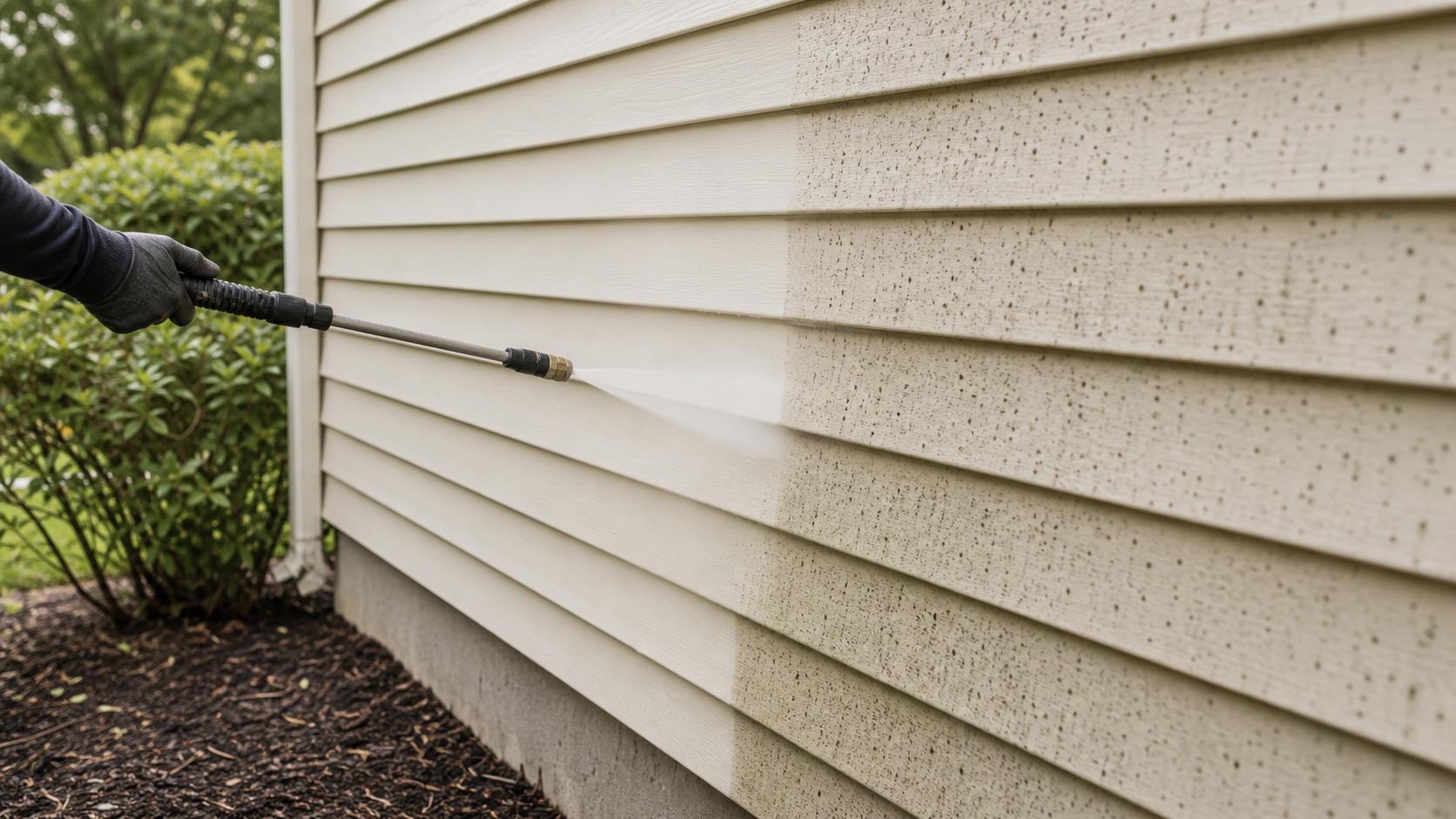
Artillery fungus removal is hard once the spots cure, because the spores bond to siding like glue. Soft washing and gentle scrubbing lift fresh spots, but older ones often need hand work and may leave a faint mark. The real fix is removing the mulch that launches them in the first place.
What is artillery fungus?
Artillery fungus is a mulch-borne fungus that shoots tiny, tar-like black spores onto nearby surfaces. It aims at bright spots, so light siding, soffits, and parked cars get peppered. The spots are sticky when fresh and harden into stubborn brown-black flecks that look like someone flicked tar at the wall.
It thrives in the damp hardwood mulch piled against foundations all over Northern Virginia. The spores can launch several feet, which is why the lower third of a wall facing a mulch bed takes the worst of it. Most homeowners first notice it as dozens of small dots that will not rinse off.
Can you wash artillery fungus off?
Fresh spots, yes. Cured spots, partly. A soft wash with the right solution plus gentle agitation lifts recent fungus, but spores that have hardened and bonded to the surface often resist washing and may need careful hand removal. On some finishes a faint shadow can remain even after the fleck is gone.
This is the honest part most pages skip: no pressure setting and no single chemical reliably dissolves cured artillery fungus without risking the siding. Blasting it harder just damages the vinyl or paint and still leaves the stain. We treat it with a surface-safe wash, work the spots by hand where needed, and tell you up front what will and will not come all the way off.
Why pressure washing is the wrong tool here
- The spores are glued on. Force that would dislodge them also gouges vinyl or strips paint.
- It spreads the problem. High pressure can drive water and debris behind the panels.
- It does not stop the source. New spots keep landing as long as the mulch is active.
The lasting fix: deal with the mulch
Artillery fungus lives in damp wood mulch, so the durable fix is changing what sits against the house. Swap hardwood mulch near walls for pine bark nuggets, rubber mulch, or stone, keep mulch pulled back from the foundation, and refresh it before it breaks down. Clean the siding, then remove the launch pad.
We have seen the same house get re-peppered within a season when only the siding was cleaned. Treat both: a wash to clear what is there, and a mulch change to stop the next round. It is the difference between a yearly battle and actually being done with it.
Spotted artillery fungus on your siding?
We soft wash and hand-treat fungus-spotted siding across Fairfax, Manassas, and Woodbridge, and tell you honestly what will come off. Licensed, insured, veteran-owned.
Frequently asked questions
What is artillery fungus?
Artillery fungus is a mulch-borne fungus that shoots tiny tar-like black spores onto nearby surfaces, aiming at bright ones like light siding and cars. The spots are sticky when fresh and harden into stubborn brown-black flecks. It thrives in the damp hardwood mulch common around Northern Virginia foundations.
Can you pressure wash artillery fungus off siding?
Not safely. The spores bond to siding like glue, and the pressure needed to dislodge cured spots also gouges vinyl or strips paint, and can drive water behind the panels. A surface-safe soft wash plus gentle hand work is the right approach, and even then some cured spots may leave a faint mark.
Does artillery fungus come off completely?
Fresh spots usually do. Cured spots often come most of the way off, but spores that have hardened can leave a faint shadow on some finishes even after the fleck is removed. We tell you up front what to expect rather than promising a perfect result that the fungus will not allow.
What kills artillery fungus?
No single household product reliably dissolves cured artillery fungus without risking the siding. Cleaning lifts what is on the surface, but the lasting fix is removing its food source: replace damp hardwood mulch near the house with pine bark, rubber, or stone, and keep mulch pulled back from the walls.
How do I stop artillery fungus from coming back?
Change the mulch against the house. Artillery fungus lives in damp wood mulch, so swap hardwood mulch near walls for pine bark nuggets, rubber mulch, or stone, keep it pulled back from the foundation, and refresh it before it breaks down. Cleaning alone lets new spots land within a season.
Why is artillery fungus so common in Northern Virginia?
Our humid climate and the hardwood mulch piled against foundations give the fungus exactly what it needs. The spores launch several feet toward bright surfaces, so light siding and soffits facing mulch beds get peppered. It is one of the most common siding complaints we see across the area.
or call 703-853-4738