
Surface-safe cleaning
Can You Pressure Wash Vinyl Siding?
Pressure washing vinyl siding is possible, but high pressure is risky. Strong jets force water up under the overlapping panels, where it gets trapped and feeds mold. The surface-safe method is soft washing: low pressure plus a cleaning solution that kills algae at the root. In Northern Virginia’s humidity, that is what we use.
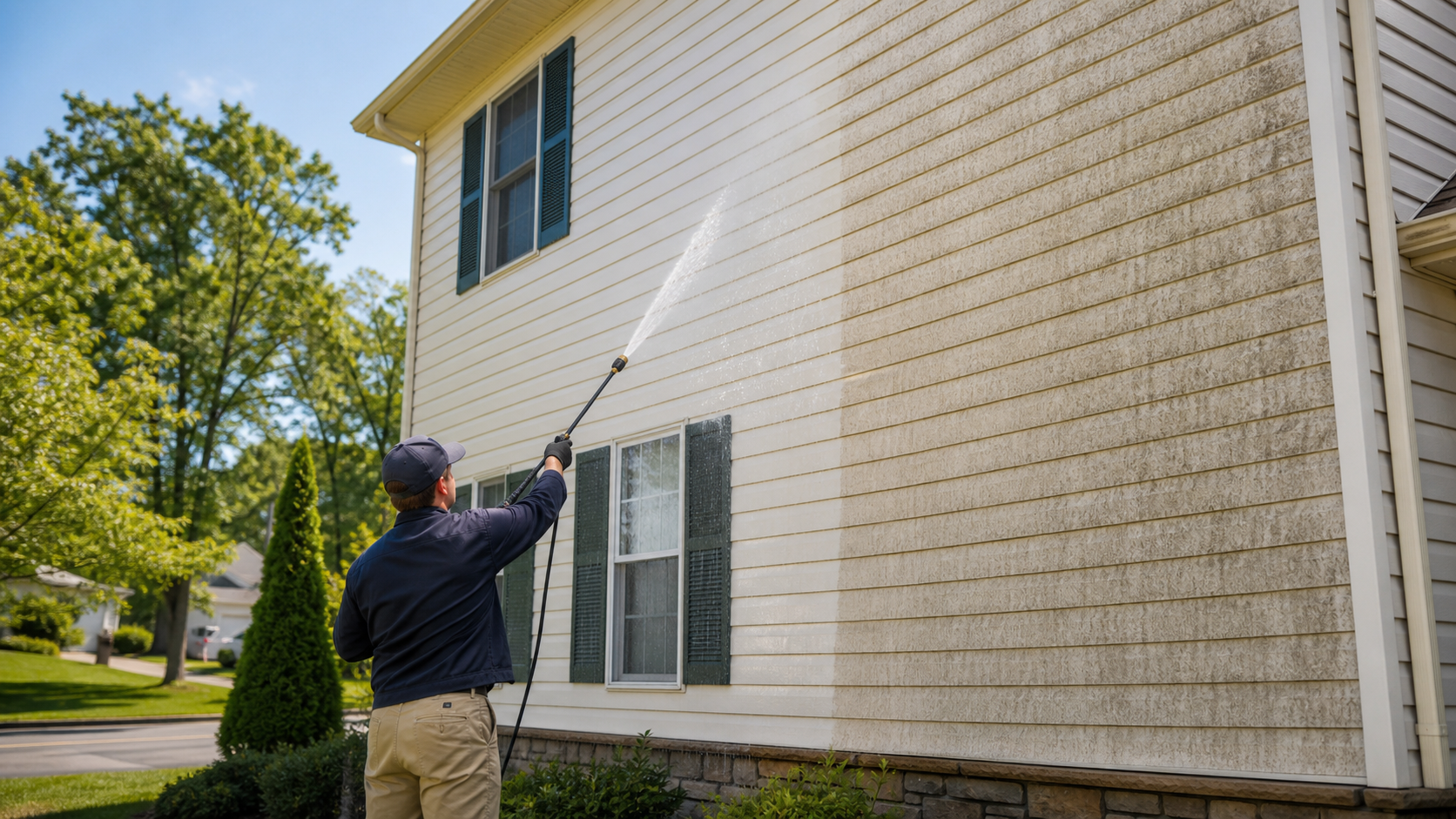
Can you pressure wash vinyl siding yourself?
You can, but most homeowners use too much pressure and the wrong angle. Vinyl panels overlap and stay open at the bottom edge. A high-pressure jet aimed upward pushes water behind them, and that trapped moisture is what causes mold, staining, and warping later.
A pressure washer that handles a driveway will treat siding far too aggressively. Vinyl is thinner and more flexible than it looks, and it turns brittle in cold weather. Hold the wand too close, or catch a seam or a piece of J-channel at the wrong angle, and you can crack a panel or split the lap joint. Water also finds its way into wall vents, light fixtures, and outlet boxes when the spray is pointed up under the laps.
The other problem is what you can’t see. Siding usually looks clean the moment the water hits it, so it’s easy to think the job is done. But pressure alone rinses surface dirt without killing the algae and mildew rooted in the texture of the vinyl. Those spores come back within weeks, often darker than before.
Why soft washing is the surface-safe method
Soft washing cleans vinyl siding with low pressure, close to a garden hose, paired with a cleaning solution that breaks down mold, algae, and mildew. It removes the growth at the root instead of blasting the surface, so the siding stays clean far longer and the panels are never put at risk.
Here is the difference in plain terms. Pressure washing relies on force. Soft washing relies on the cleaning solution, then a gentle rinse. The solution does the work that water pressure can’t, which means we can leave the high PSI on the truck where vinyl is concerned.
| Soft washing | High-pressure washing | |
|---|---|---|
| Pressure | Low, near a garden hose | High, the same force used on concrete |
| What does the work | The cleaning solution | Water force alone |
| Algae and mildew | Killed at the root | Rinsed off the surface only |
| Risk to panels | Minimal | Cracks, warping, water behind the siding |
| How long it stays clean | Much longer | Weeks, then it regrows |
Soft washing also protects everything around the house. Our crews wet down plants before and after, keep the solution off windows and trim, and rinse thoroughly so nothing is left to streak. The result is even, and it lasts. For a side-by-side breakdown, see our guide on soft wash vs pressure wash.
What pressure washing does to vinyl when it goes wrong
Most of the damage we get called to fix follows the same pattern:
- Water behind the panels. The most frequent issue, and the most expensive, because the mold grows where you can’t reach it.
- Cracked or chipped panels. Cold vinyl and a close, high-pressure jet are a bad mix, especially on older siding.
- Stripped or oxidized finish. Older vinyl already chalks, and too much pressure leaves uneven, dull patches.
- Peeled paint. On painted vinyl, a strong jet lifts the coating right off.
- Forced-in water at fixtures. Vents, lights, and outlets are easy to flood when spraying upward.
None of this shows up in the first hour. It shows up weeks later as streaks, soft spots, or a musty smell near an exterior wall. That delay is exactly why a careful method matters more than a powerful one.
Want it cleaned without the risk?
We soft wash vinyl siding across Fairfax, Manassas, and Woodbridge. Licensed, insured, and backed by a 100% satisfaction guarantee.
Can you use bleach on vinyl siding?
A diluted, surfactant-based solution is standard for cleaning vinyl siding, and it is what most professional soft washing uses. Straight household bleach poured on at full strength can scorch plants and leave streaks. The mix, the dilution, and protecting the landscaping are what keep it safe.
The chemistry isn’t the dangerous part when it’s handled right. The mistakes are dumping it too strong, skipping the plant prep, and letting it dry on the siding in direct sun before rinsing. We pre-wet greenery, work in manageable sections, and rinse before anything dries. That’s the boring detail that separates a clean house from a streaked one with dead shrubs along the foundation.
How often should you wash vinyl siding in Northern Virginia?
Most Northern Virginia homes need vinyl siding washed about once a year. Our humid summers, heavy tree cover, and spring pollen feed algae quickly, especially on north-facing and shaded walls. A yearly soft wash keeps growth from setting in and protects the finish over the long run.
Shaded sides go green first. If your house backs to woods in Woodbridge or sits under mature oaks in Fairfax, the north and east walls will show algae long before the sunny sides do. Homes near the water or in low, damp spots tend to need attention a little sooner. A quick annual wash is far cheaper than letting growth dig into the surface for three or four years.
Frequently asked questions
Should you pressure wash or soft wash vinyl siding?
Soft wash. Vinyl siding should be soft washed, not pressure washed. Low pressure plus a cleaning solution removes mold and algae at the root without forcing water behind the panels. High pressure cleans the look of the surface briefly but risks trapped moisture, cracks, and faster regrowth.
What PSI is safe for vinyl siding?
If pressure is used at all, keep it low, around 1,300 to 1,600 PSI with a wide tip and plenty of distance. Soft washing works at far lower pressure than that, close to a garden hose, and relies on the cleaning solution instead of force. Lower is safer on vinyl.
Can you pressure wash painted vinyl siding?
Painted vinyl needs extra care. High pressure can peel or chip the coating, so soft washing is the safer choice. A low-pressure rinse with the right solution cleans painted vinyl without lifting the paint. Test an out-of-the-way spot first if you are unsure of the finish.
Will pressure washing damage my vinyl siding?
It can. Too much pressure, too close an angle, or spraying upward forces water behind the panels and can crack or warp them, especially in cold weather. Damage often shows up weeks later as mold or staining. Soft washing avoids the risk and is the method we use.
Why does the algae keep coming back after I wash it?
Plain pressure washing rinses surface dirt but leaves the algae and mildew rooted in the texture of the vinyl. Those spores regrow within weeks. A cleaning solution kills the growth at the root, which is why a soft wash stays clean far longer than a rinse with water alone.
Does washing vinyl siding kill my plants?
Not when it’s done carefully. We pre-wet plants before and after, keep the solution off the landscaping, and rinse thoroughly so nothing dries on leaves. The risk comes from undiluted solution and skipped prep, not from a properly handled soft wash.
or call 703-853-4738